Makuleke Concession – Kruger National Park by Janine Southwood

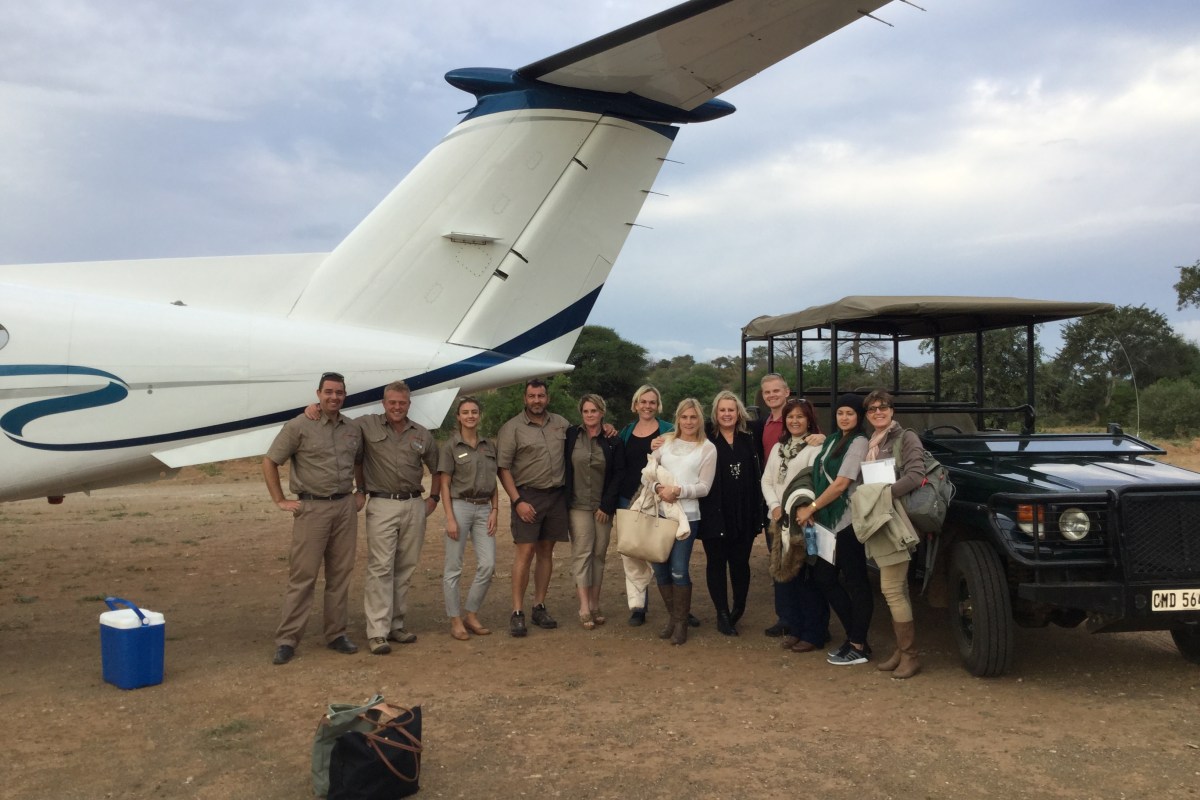
Over the last couple of months I have been fortunate to visit the Makuleke Concession in the very North of the Kruger National Park. This size of this concession is 19 842 hectares.  Flight from Lanseria airport is around 1 hour and 30 minutes in a King Air, 10 seater.

To start with a bit of history, the Tsonga speaking Makuleke tribe were originally from Mozambique but settled in the Pafuri region in the early 1900’s. In 1969 the Government of South Africa wanted to incorporate the Pafuri triangle into the Kruger National Park and relocated 1500 Makuleke tribe members.  In 1996, the Makukele put in a claim for their land back.   They chose not to resettle on their land but to engage with the Private Sector to invest in tourism, thus resulting in the building of several game lodges, that being The Outpost and Pafuri.

The Pafuri triangle has 2 main river sources – that being the Luvuvu River that eventually flows into the Limpopo River – at this point where they meet is Crooks Corner (got its name many, many years ago due to its perfect location for an unsavoury character to hide out and run from the law – this small ‘hideout’ is where 3 countries (Mozambique, Zimbabwe and South Africa) meet making it easier to hop across borders without being stamped carrying all your stolen goods.
Dry Limpopo river
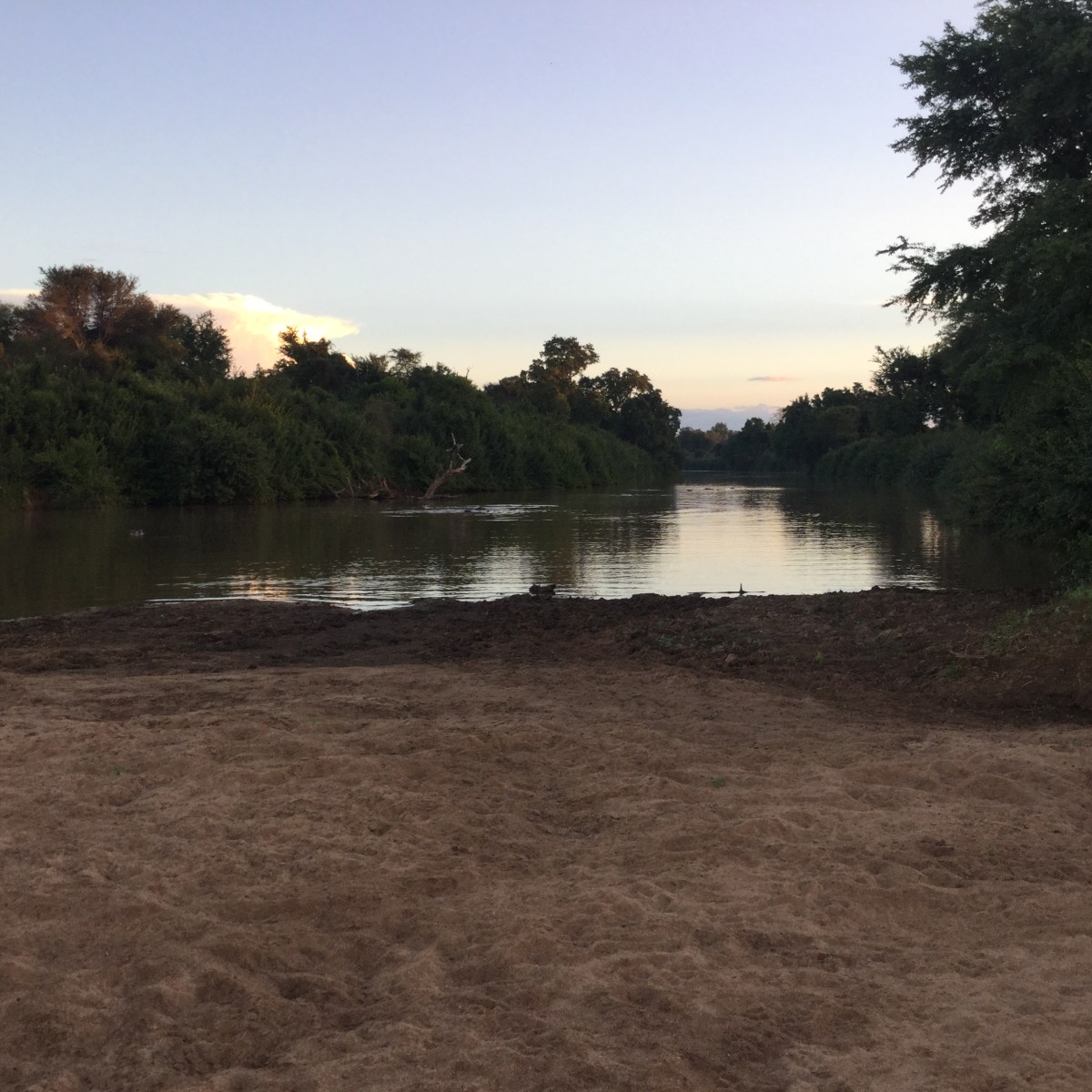
Dry Limpopo River
Luvuvu River meeting Limpopo River

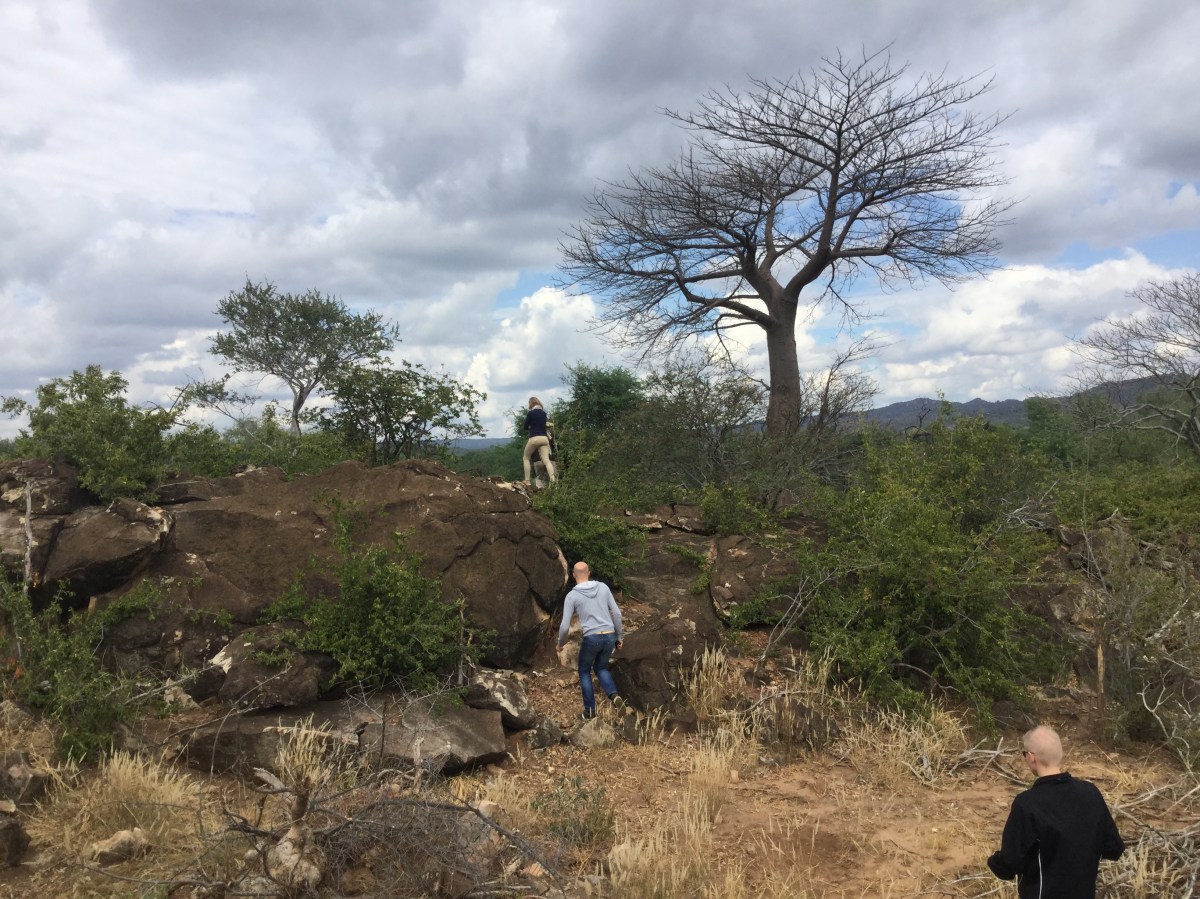
This concession is truly spectacular with so much diversity. Of course being Kruger National Park, there is wildlife all around however this is not big Cats territory. They are there, but elusive and are seen on rare occasions.  This does give opportunity to seek out and study the natural wildlife in the area, being the trees, the geological infrastructure as well as the brilliant birding in the area. Although this concession only accounts for about 1% of the Kruger National Park, it does ‘house’ 75% of the plants and animals represented in the whole park. The Makuleke Concession has seen a bit of rain lately but not nearly enough as they should have had, as is story in the rest of South Africa. But in saying that the area is green and flourishing. The Luvuvu River is flowing gently but the Limpopo River is dry.
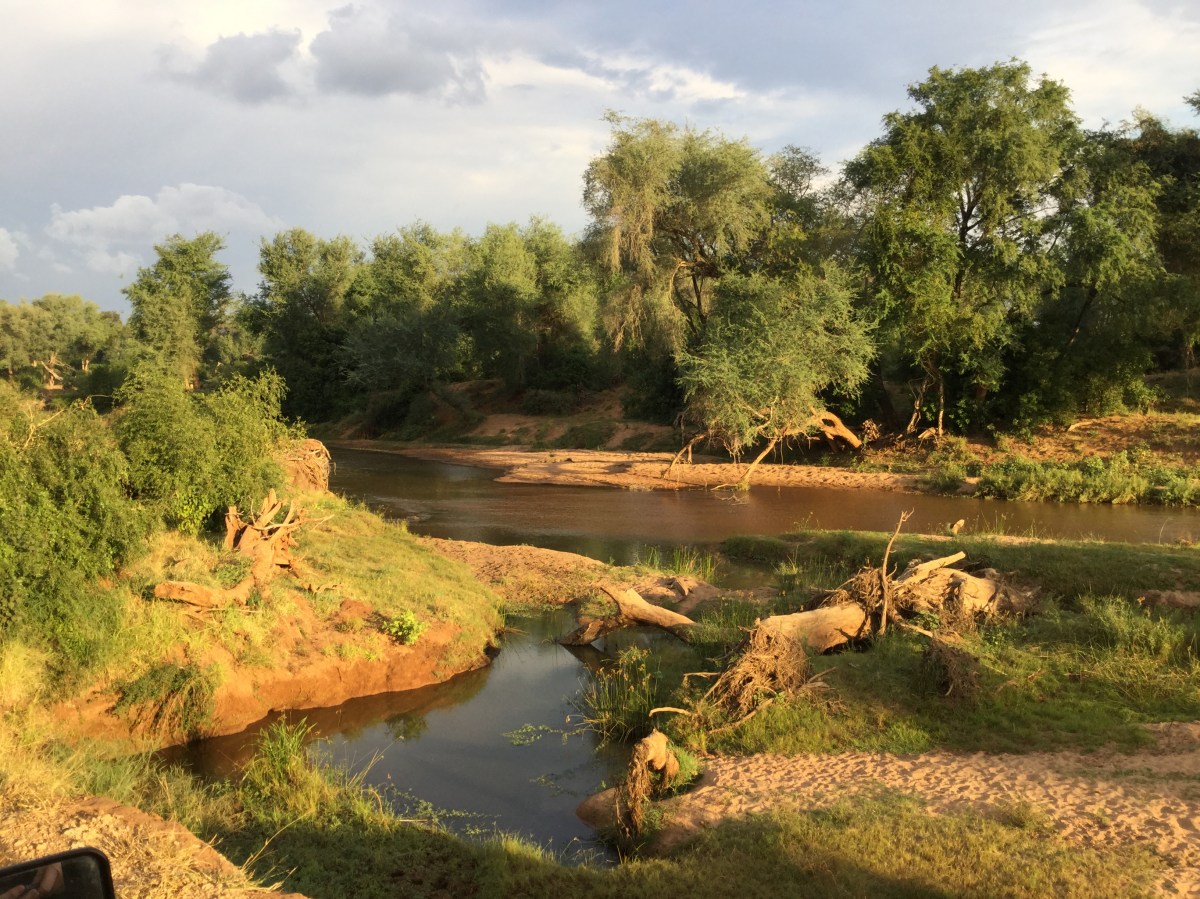
Makuleke Concession 2

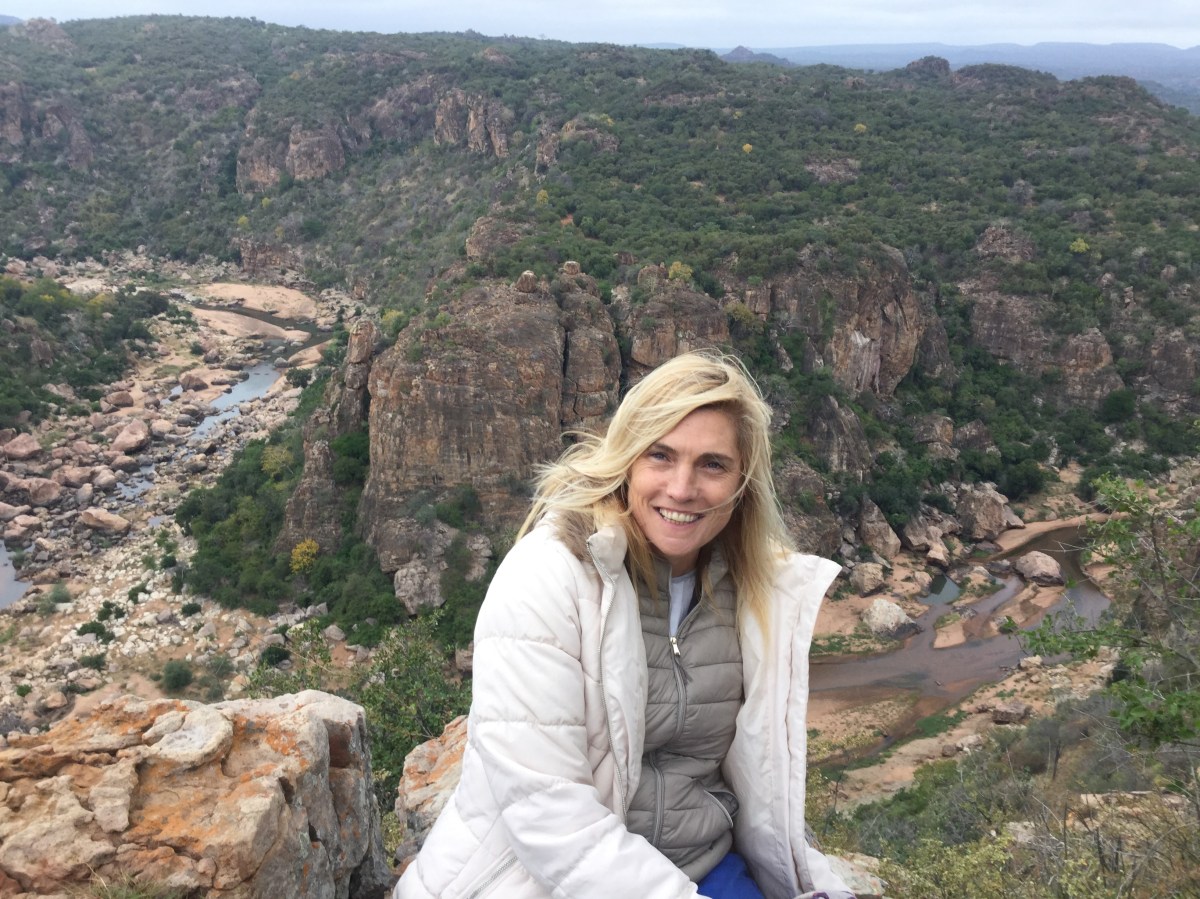
Highlights for me were Lanner Gorge, named after the Lanner Falcon which resides in the gorge.  The views from the gorge are breath-taking and one can see for miles.  The history of the rocks in this gorge is incredibly fascinating and dating back over 250 million years back.  En Route to Crooks Corner we passed through Fever Tree Forest which is also remarkable and unique.  Has almost a ghostly and eerie feel to it, having so many Fever Trees together with absolute silence.   Not forgetting this is Baobab country and of course at every corner there is the majestic ‘upside down trees’ we call Baobabs.  Again they just have such a status about them and you feel like you have to bow down at each one with respect.  On our drives we saw Zebra, Giraffe, Impala, Kudu, Nyala, Hyena, big herd of Buffalo, elephants, Martial Eagle, Bush Babies, crocodiles, hippo’s baboons and so many more beautiful birds, the list is endless. So I would definitely recommend Pafuri or the Outpost for a combination Safari, Of course cats are pivotal to any safari so combine with Sabi Sands, Timbavati, Mashatu and once you set  foot on this unique area, you can focus on the natural surroundings.
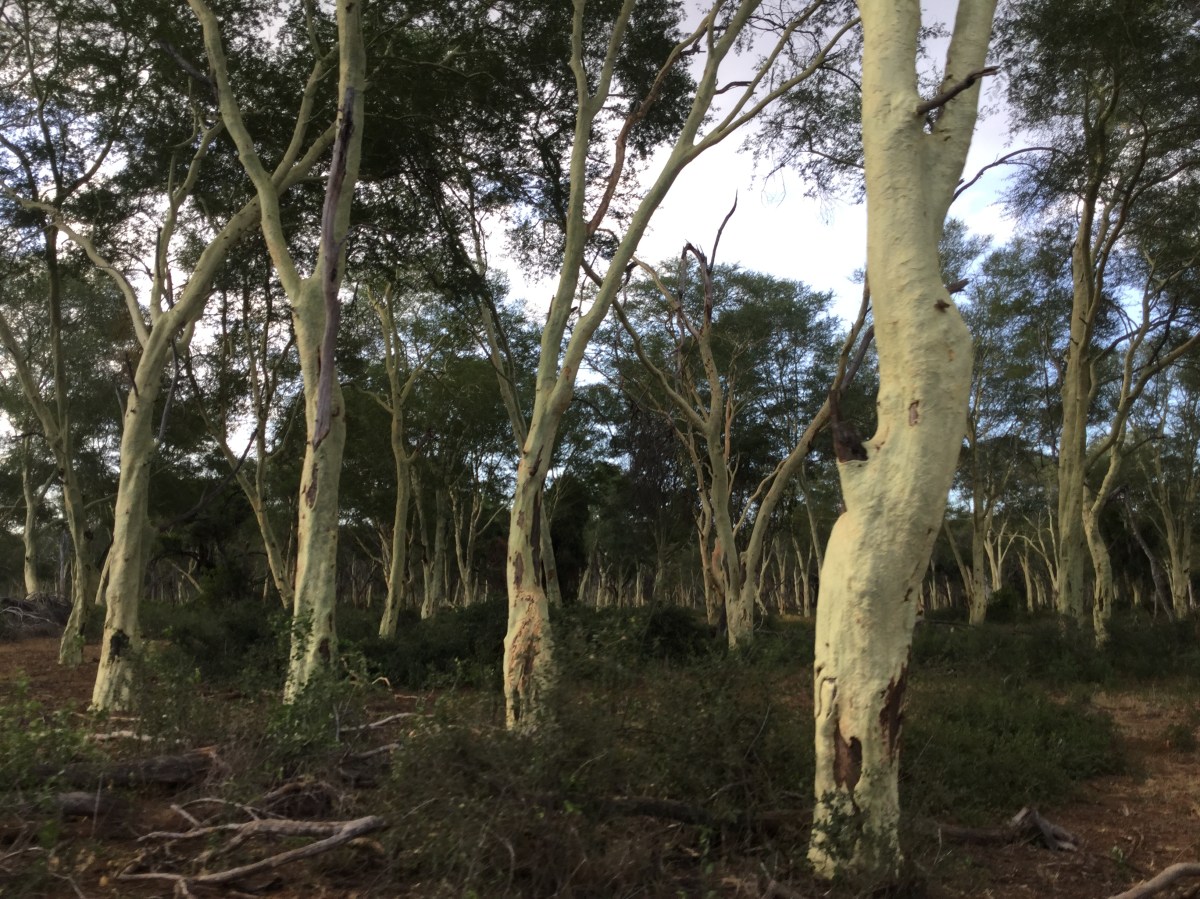
Fever Tree Forest
Fever Tree Forest
Lanners Gorge
Lanners Gorge

The Outpost

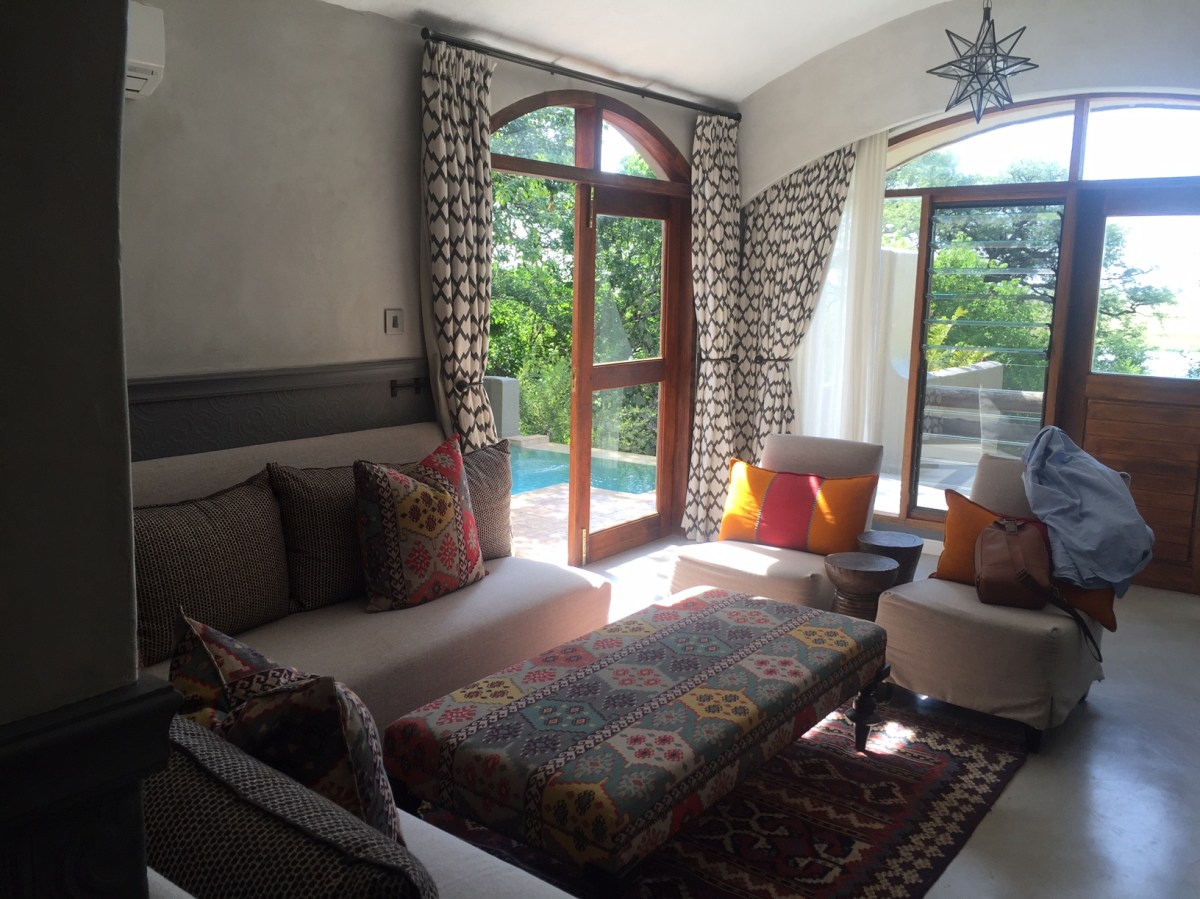
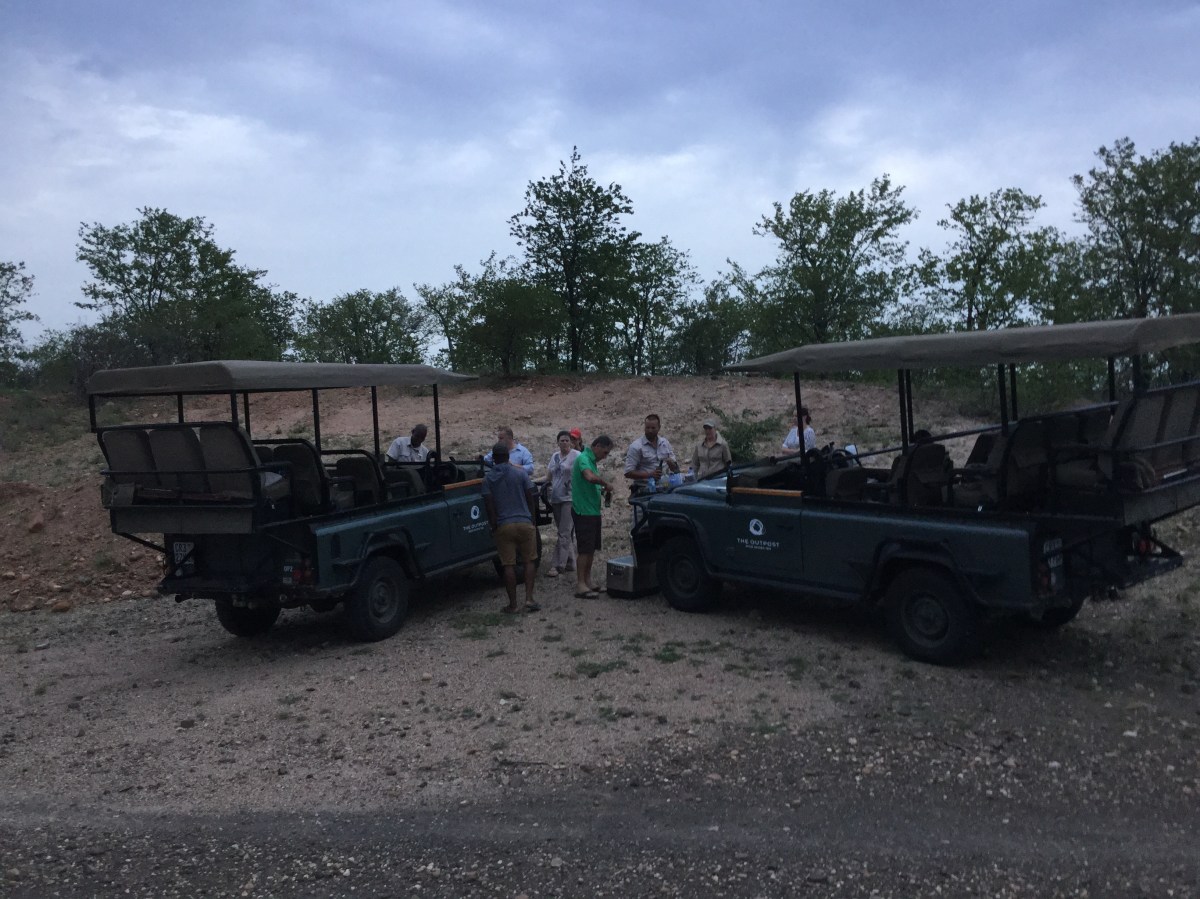
The Outpost Lodge is located in the western corner in the Northern Sector of Kruger National Park, not far from the Limpopo River.  The lodge itself is set up high overlooking the Luvuvhu River. Rooms are positioned amongst a very tranquil and scenic region. There are 12 very spacious rooms with amazing views overlooking the spectacular terrain. Rooms are very big and are open planned all facing outwards to the scenery. All rooms are decorated in very natural colours blending into the environment. Everything is 100% at your own pace, true to ‘African time’.   Food was up to 5 star lodge standard and just outstanding.   Our first night welcomed an amazing African thunder storm and lots of rain, which is definitely a requirement on an Africa bucket list. The staff were top notch! They were exceptionally friendly and always went out of their way to ensure our stay was FIRST CLASS. Overall, a great experience!
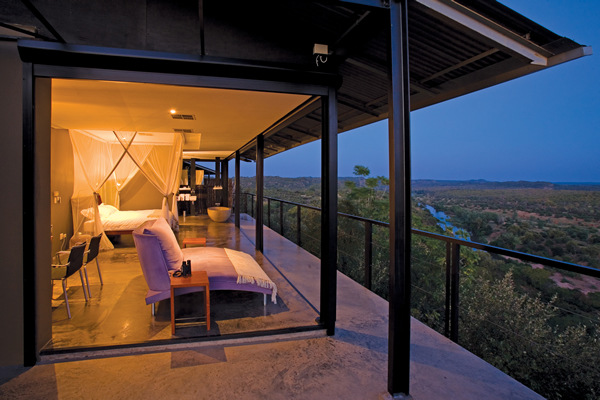
The Outpost 1

The Outpost 2

Pafuri Camp

Return Africa is the company who has now rebuilt the camp and has built 3 sites. First being Pafuri Camp. This camp is very authentic and almost belongs in Botswana.  There are 19 rooms and they all sit along the Luvuvu River.  Rooms are tented on an elevated foundation with a great veranda overlooking the river.  The room faces the river with the bathroom behind.  No baths but a lovely big shower inside and one outside.  From the central area there are elevated walkways to the rooms.  On several occasions I was escorted to my room by kudu and of course the infamous curios vervet monkeys.  Central areas very spacious with a great pool area complimented by a bar.  Throughout my stay at Pafuri Camp, the river in front of the lodge was visited by a couple of old male buffalos. Dinner one evening was in their boma which was a true African experience and definitely adds great value to the stay.
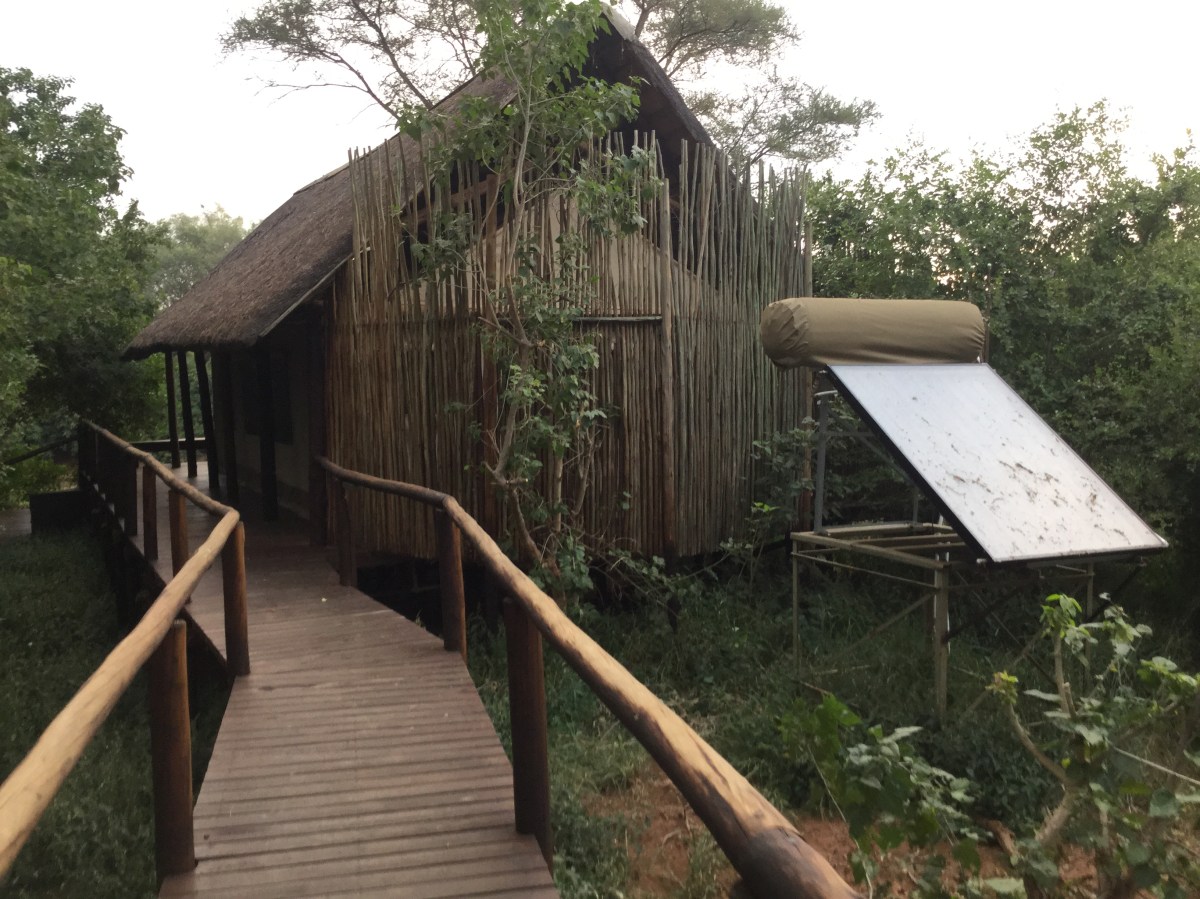
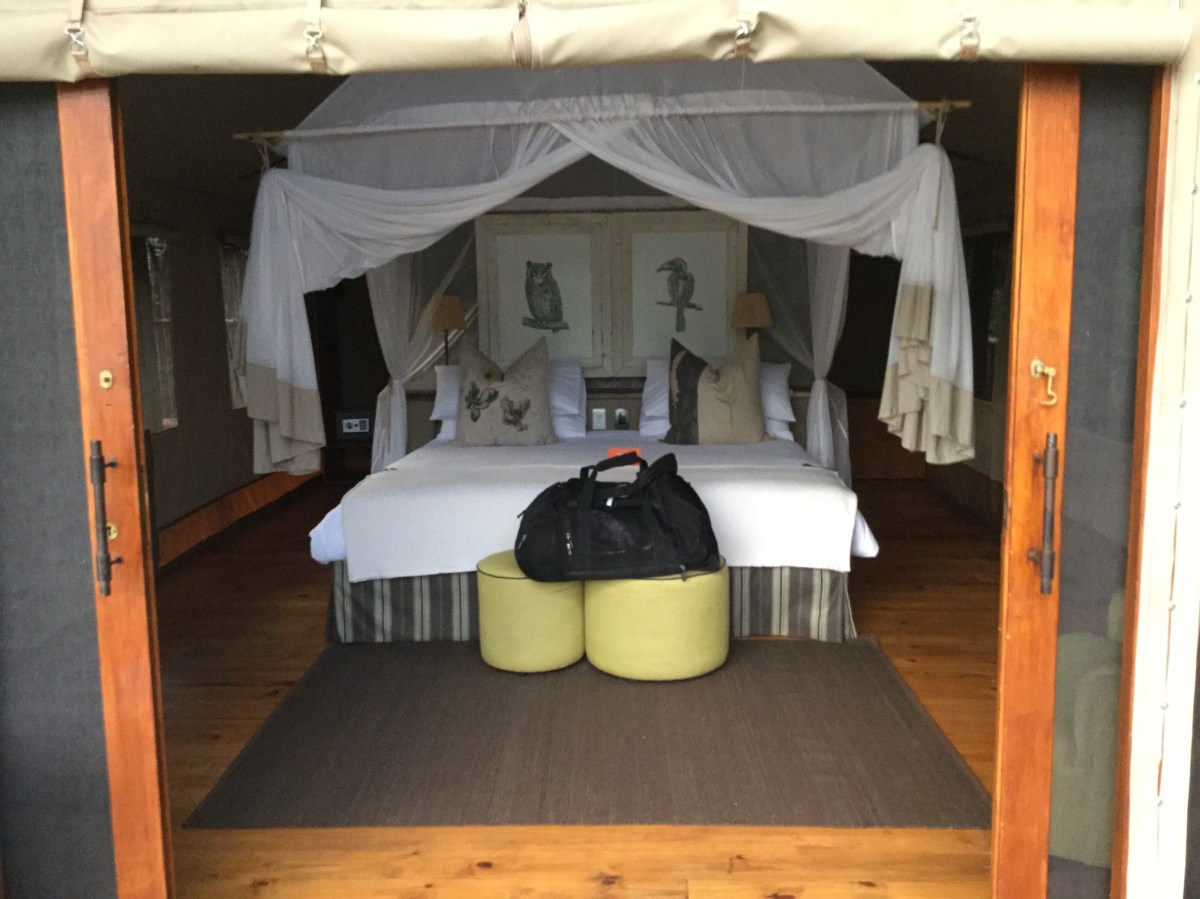
Pafuri 1Pafuri 2

Pafuri Tented Camp Site

Not far from Pafuri Camp is Pafuri Tented Camp Site.  I loved this little camp – accommodates 10 pax max.  Such a great little camp for the adventurous.  This camp offers walking trails between April to October.
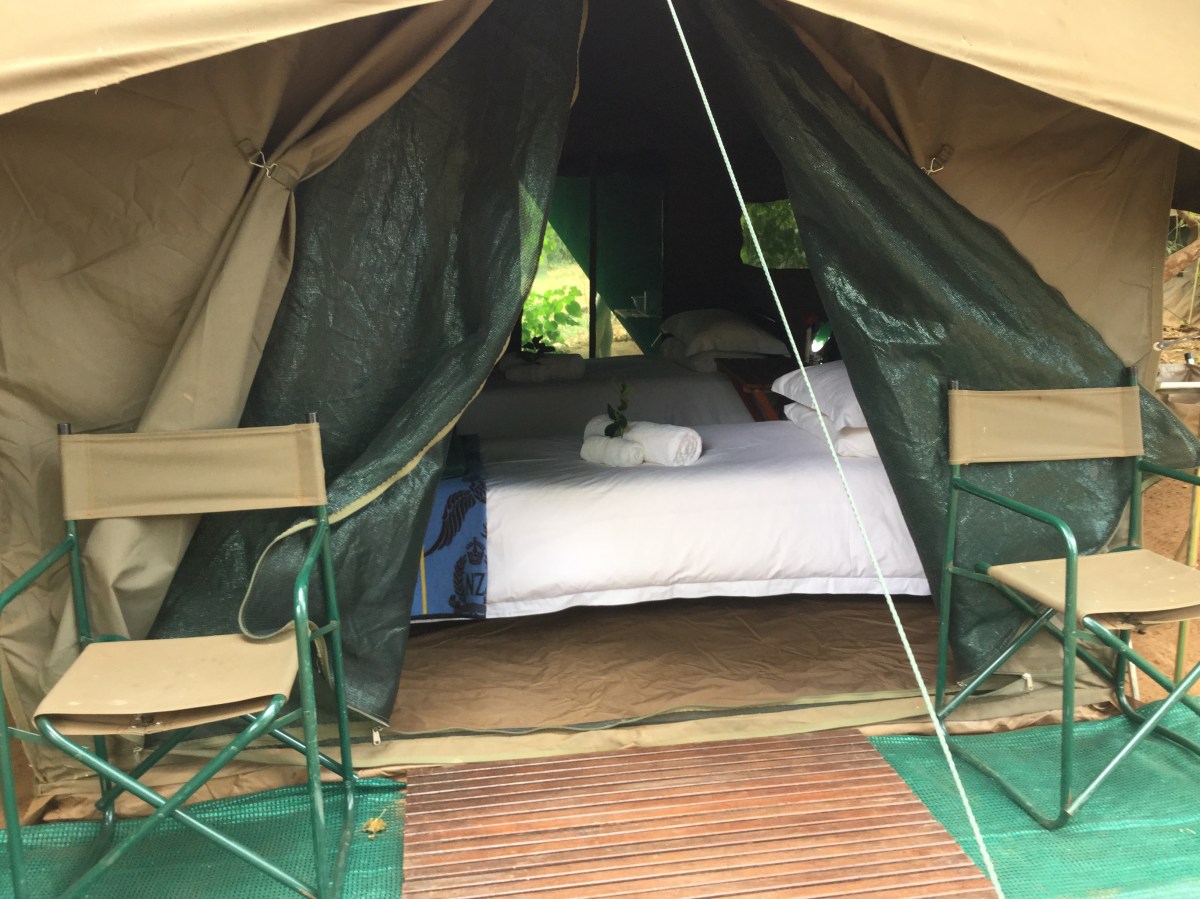
Pafuri Tented 1Pafuri Tented 2

Baobab Hill House

Then lastly they offer a private home called Baobab Hill House – This was once the Pafuri ranger’s station. Very farm style and rustic but wonderful for a group of 8 – it has 4 rooms and comes with ranger and vehicle.  It is self-catering but you do have the option for lodge to do catering or you can have meals at Pafuri main camp and utilize their bar.
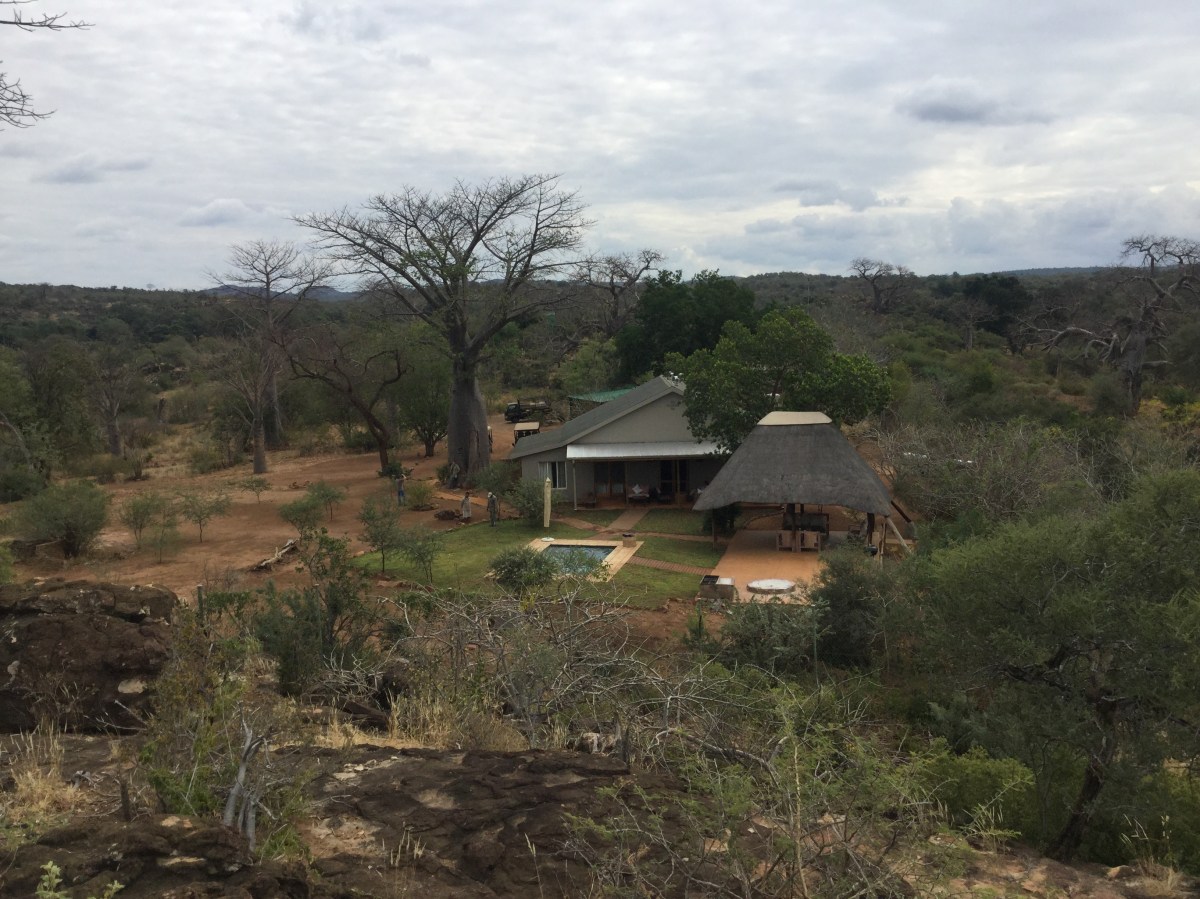
Baobab Hill House 1Baobab Hill House 2

Staff at all the camps were phenomenal and many have been with Pafuri since Wilderness Safaris opened the camp many years back.   One to mention is Godfrey who runs the camp.  Hard to find words to describe such a character.  Full of stories that keep you gaping for more. He is charming and unforgettable. His warmth is carried down to all his staff.

Makuleke Concession is a specialist safari seekers’ destination. Being so north, it is very much a ‘no man’s land’ – very little ‘traffic’.  You are truly hidden away in a remote and unique part of the Kruger National Park leaving you to discover the earth and its contents all by yourself.
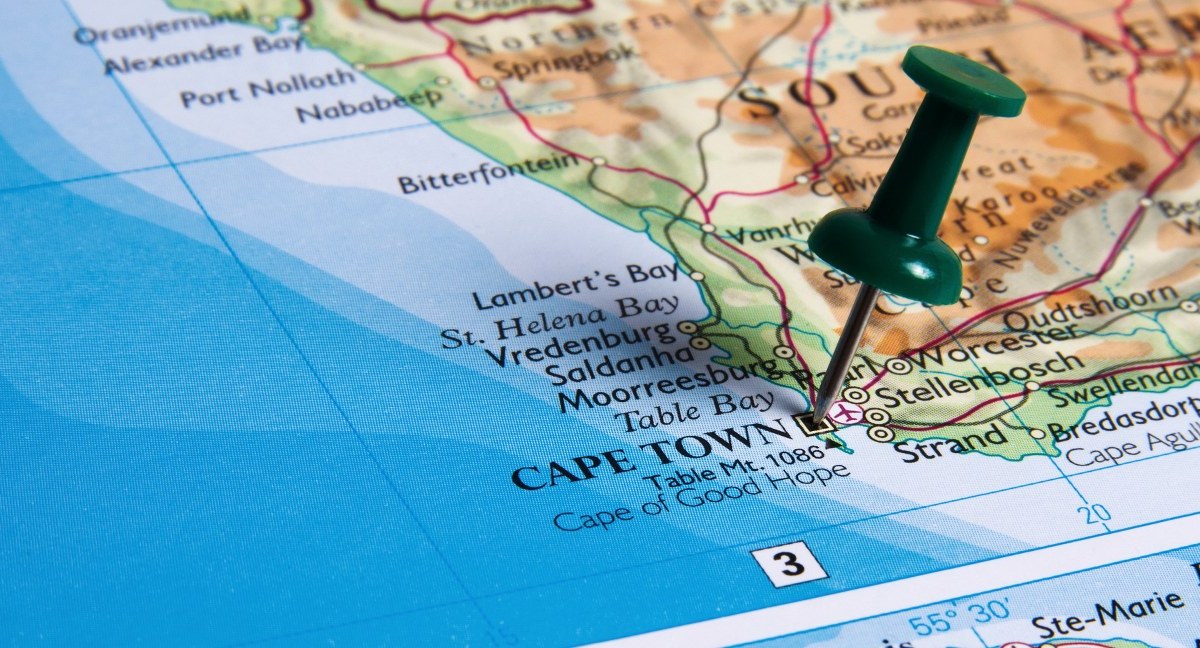
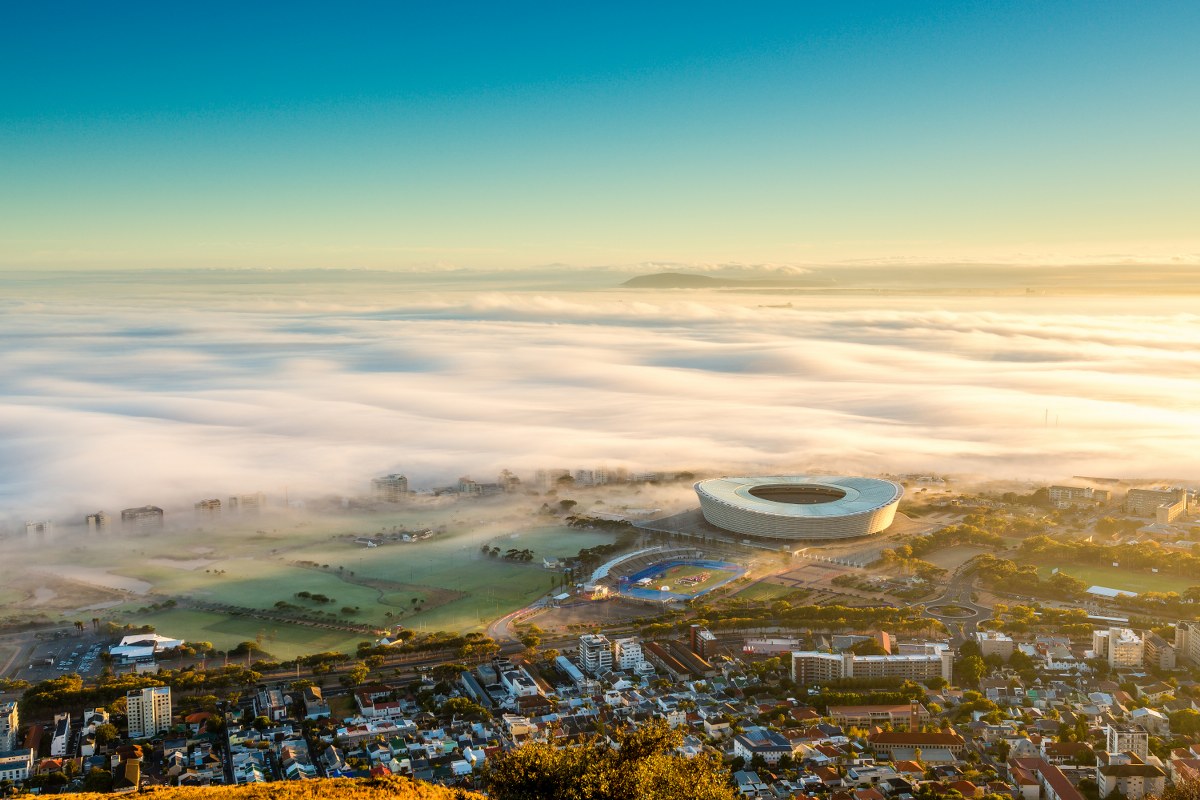
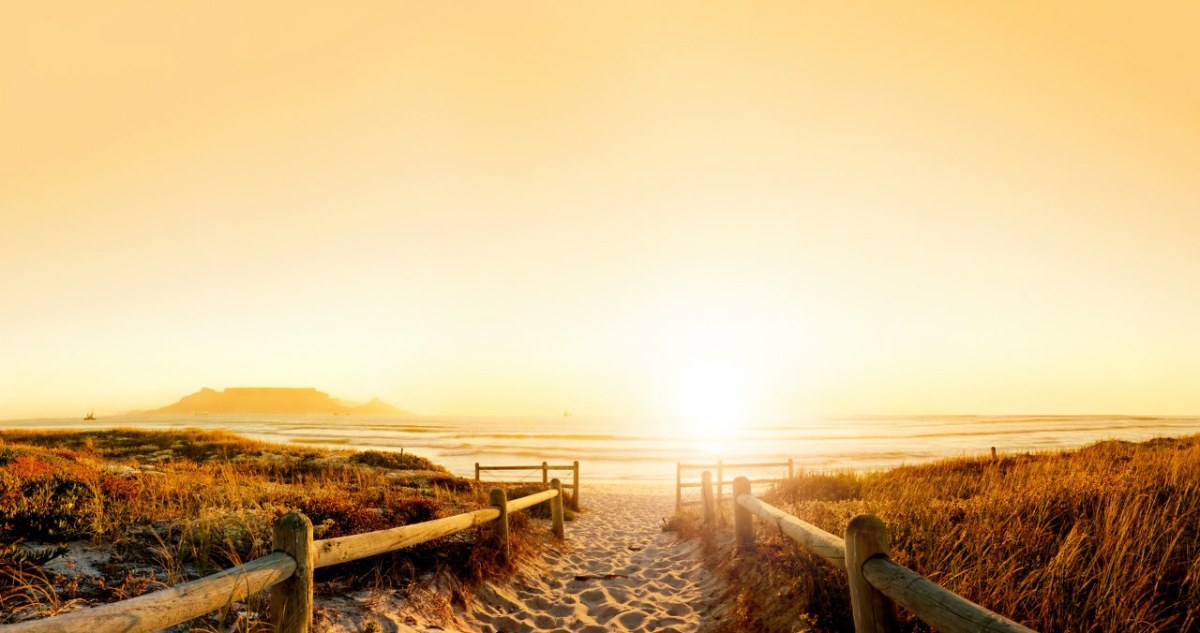
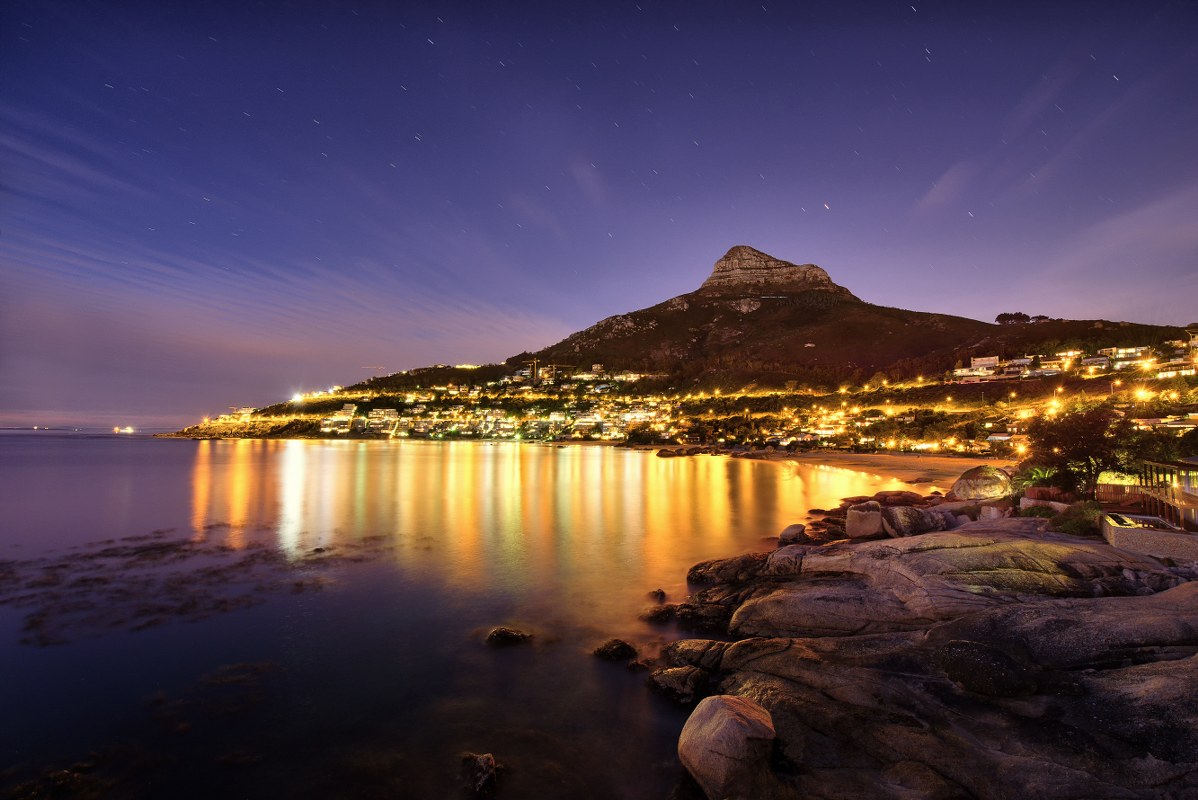
Cape Town Puts Her Best Foot Forward

The winners of the 2015-16 Telegraph Travel Awards, voted for by more than 75,000 readers, have been announced and Cape Town has  scooped the best city award, for the fourth consecutive year!  With Cape Town having recently been placed first on the Top 15 Best Food Cities in the World according to Conde Nast Traveler, Cape Town really is putting her best foot forward!

Cape Town Aerial view_276019727_1200x800Cape Town_88396048_1280x676Cape Town_190629386_1198x800

Cape Town Wins Conde Nast Traveler Top Best Food City in the World

Cape Town has been placed first on the Top 15 Best Food Cities in the World according to Conde Nast Traveler….. http://www.cntraveler.com/galleries/2015-04-07/worlds-best-food-cities-readers-choice-awards-2014/15.

With a range of dining options to whet anyone’s pallet, it’s no wonder! Look out for the next Linda’s Letter coming out on 1 June when Linda gives her inside scoop on four awesome Cape Town dining experiences!

Don’t you love South Africa?!

New Guided Journey for 2017

We are thrilled to be introducing a new and very unique fully escorted tour for 2017.

Our Cape, Karoo & Garden Route Secrets Guided Journey will see you spending 5 days exploring the treasures, wildlife and hidden gems in the Klein Karoo, Garden Route and most southerly tip of the African continent: Cape Agulhas. This Journey will enthral you with everything that makes our Cape coastline, indigenous forests and rugged coastal shorelines unique to South Africa. From intimate wildlife encounters and breath taking nature to delightful culinary experiences, this journey showcases the best of the Cape and is not to be missed.

Cape Agulhas Lighthouse_59319364

Unique Highlights Include:

  • A fully guided experience walking with wild meerkats
  • Oyster shucking
  • Tenikwa Wildlife Awareness Centre where you will learn more about the indigenous wild cats of South Africa
  • Visit the most Southern top of Africa
  • A visit to an elephant sanctuary for a life changing interaction with Africa’s gentle giants

Includes:

  • 4 Nights’ Accommodation
  • 4 Breakfasts  |  1 Lunch  |  2 Dinners
  • Hotel porterage
  • Conservation Levy and Park Fees

* Guests may start the tour from Stellenbosch.

Day 1: (Mon) Oudtshoorn (D)

We depart from Cape Town by 07h30 and travel via Stellenbosch to collect fellow Guests. We then continue via the town of Montagu to scenic ‘Route 62’ celebrated as being the longest wine route in the world. In the pretty village of Barrydale we stop for light refreshments (own account) and start the Journey to Oudtshoorn in the ‘Klein Karoo’. This afternoon we go underground to marvel at the icy looking stalactite, stalagmite, column and curtain formations in the Cango Caves. The caves are regarded, for good reason, as one of South Africa’s most spectacular natural wonders.  In the late afternoon, arrive at our unique accommodation in ‘Klein Karoo’, surrounded by breath taking views of the Swartberg and Outeniqua mountains.

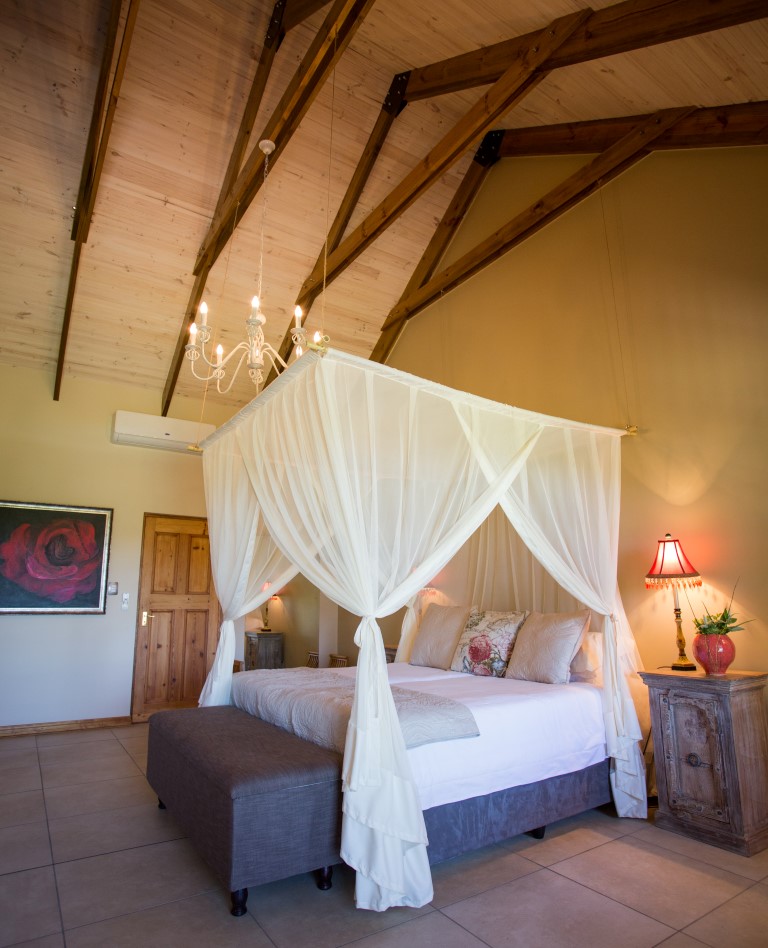
Accommodation: De Zeekoe Farm Lodge or similar

Distance travelled today: 480 kms

de_zeekoe_accommodation_5_20150115_1898664071

Day 2: (Tue) Knysna (BB)

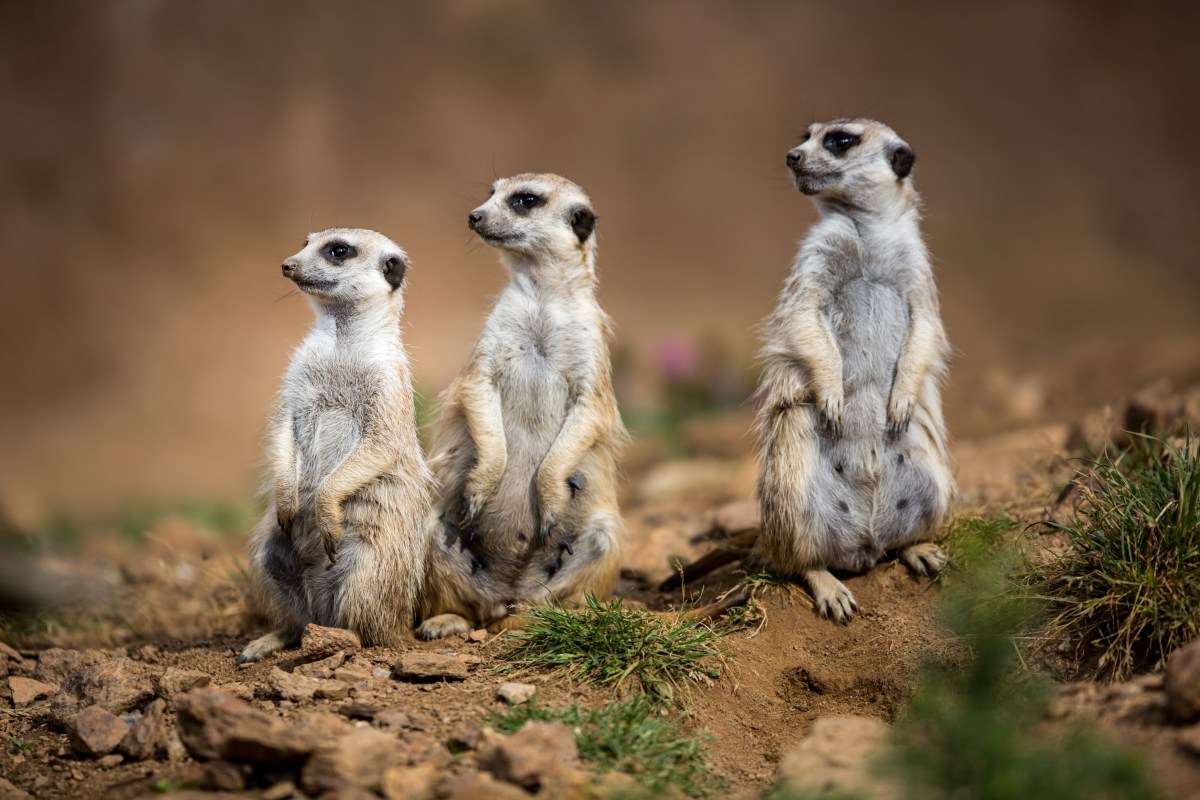
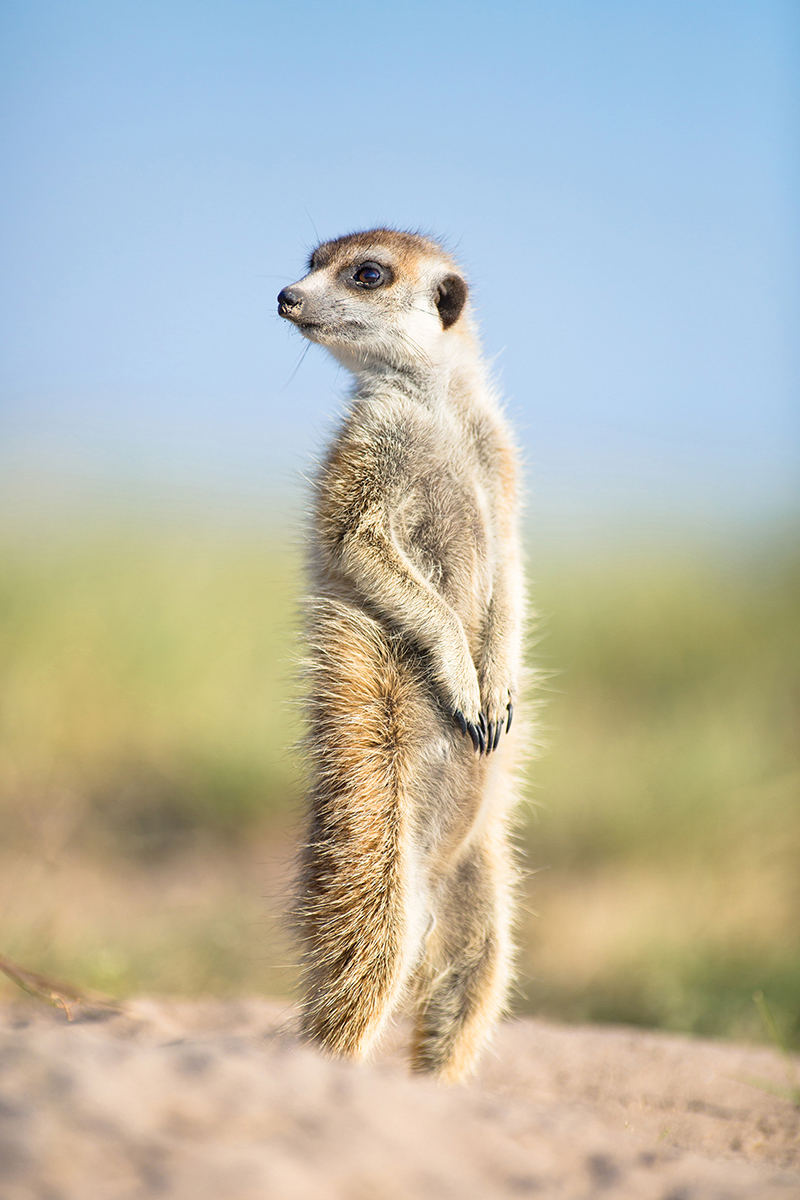
An early start before sunrise, as we embark on a magical, fully guided experience walking with wild meerkats (otherwise known as suricates). Meerkats are part of the so-called ‘Shy 5’ which also includes the bat-eared fox, the aardvark, porcupine and aardwolf. Upon arrival at the meerkat burrows, we are treated to a hot beverage and rusks. Spend time learning and observing the meerkats as they come out of their burrow into the sunshine and go about their daily routine of foraging and frolicking. These habituated wild animals are never fed or handled by humans.
meerkat_wildlife_372185419.jpg


After a hearty fresh farm breakfast, we discover why Oudtshoorn is known as the ‘feather capital of the world’ by enjoying a fascinating tour of a working Ostrich farm.  We then drive via the spectacular Outeniqua Pass to the town of George, then onto Knysna, perhaps one of South Africa’s most visually stunning resort towns, in the heart of the famous Garden Route. In the mid-afternoon we venture down to the Knysna Quays for an oyster experience and are treated to a hands-on oyster demonstration and learn all about this famous delicacy. Have a go at ‘shucking’ or opening an oyster and tasting the difference between the wild and cultivated varieties. We travel back to our country estate hotel for a delectable dinner.

Accommodation: Knysna Hollow Country Estate or similar

Distance travelled today: 200 kms


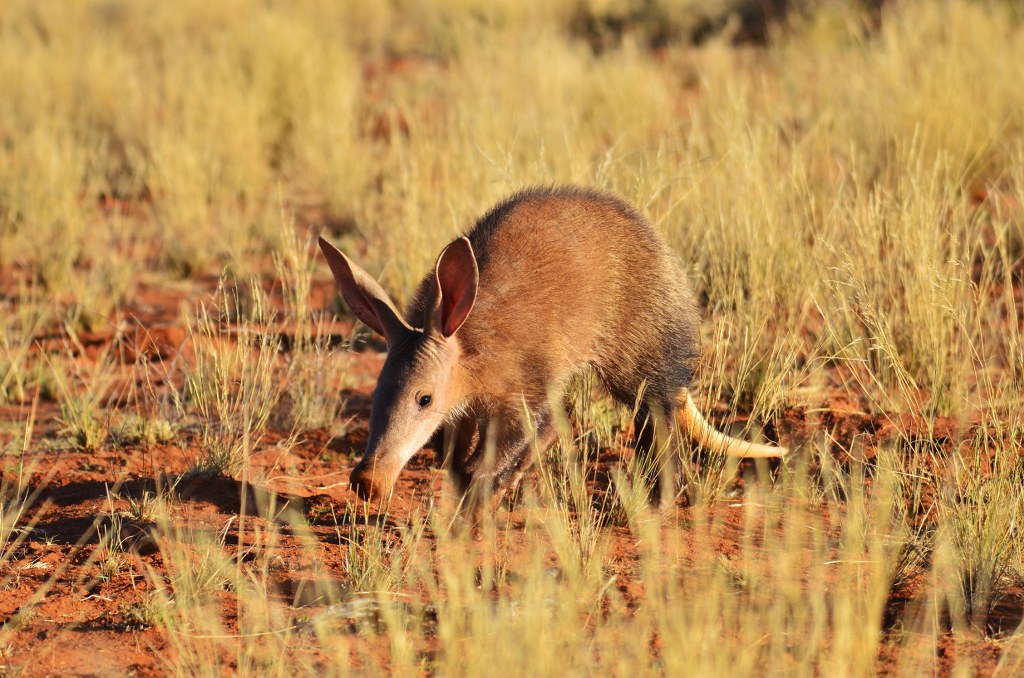
Memorable Moment: The Shy Five as they’re called, are very elusive and are masters at melting down a handy burrow.  They are an alternative game-viewing experience to the bolder Big Five and include the meerkat, the aardvark, the porcupine, the aardwolf and the bat-eared fox.  All are nocturnal animals except for the meerkat

Aardvark_308906741_1024x678Porcupine_1024x683

Day 3: (Wed) Knysna – Tsitsikamma (B, L, D)

Today is a day of stunning beauty and unique animal experiences. We explore parts of the glorious indigenous Tsitsikamma Forest and enjoy spectacular coastal views from the suspension bridges at Storms River mouth. We travel to Tenikwa Wildlife Awareness Centre for a guided tour of the centre to learn about the indigenous wild cats of South Africa such as African wild cats, servals, caracals, cheetahs, lions and leopard. After a light lunch at the centre we continue to the Elephant Sanctuary for a life changing interaction with Africa’s ‘gentle giants’. Walk ‘trunk in hand’ through the indigenous forest and finally help brush down these enigmatic creatures before we travel back to Knysna where a sumptuous a-la-carte dinner consisting of delightful locally harvested fare can be enjoyed at leisure (own account).

Accommodation: Knysna Hollow Country Estate or similar

Distance travelled today: 220 kms


Day 4: (Thu) L’Agulhas (Cape Agulhas)  (BB)

Today we trace back legends of early explorers along the rugged Cape coast. After a quick photo stop at Dolphin Point look-out in Wilderness, we arrive in Mossel Bay for a visit to the famous Post Office Tree and Bartholomew Diaz museum.  Travelling through Swellendam, we are once again back at sea level in lazy Struisbaai – a hidden treasure boasting one of South Africa’s richest sustainable fishing grounds. After a light lunch (own account), it is time to enjoy some much deserved down time in L’Agulhas relaxing at our lodge. Cape Agulhas derived its name from early 14th century explorers – mainly Portuguese, who named the region ‘Cabo das Agulhas’ which when translated means ‘Cape Of Needles’. After enjoying the spectacular sunset from the southern-most point of the African continent, a decadent dinner feast (own account) completes the day.

Accommodation: Agulhas Country Lodge or similar

Distance travelled today: 380 kms


Day 5: (Fri) Cape Town (BB)

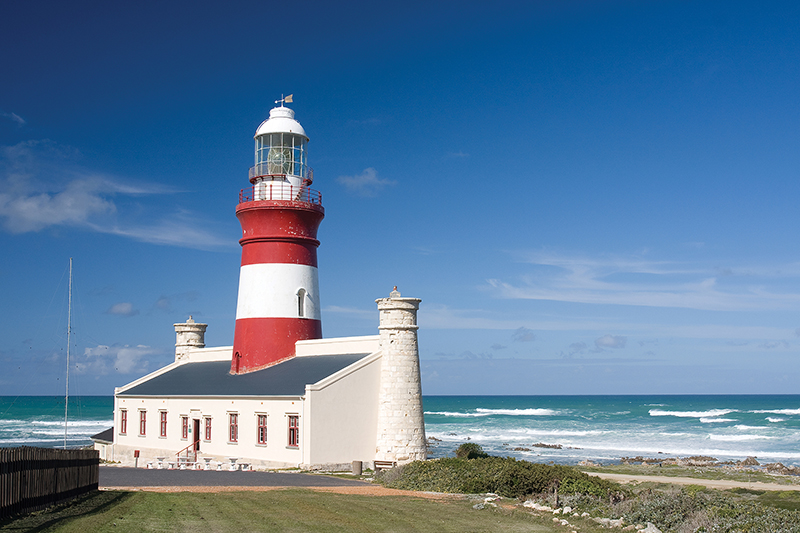
This morning we take a view from the top of the iconic 1848 built lighthouse (now a museum) that has guided ships safely around the Cape over the years. Looking out over the jagged coastline and remembering the replica ship viewed in Mossel Bay, there is little wonder the perilous oceans in Cape Agulhas became infamous amongst maritime explorers and even modern maritime experts as being hazardous. Cape Agulhas is known to have tragically wrecked over 150 vessels in its history. Leaving the town where the Atlantic and Indian oceans crash together, we travel to Hermanus where we hope to catch a glimpse of various whale species frolicking offshore with their new calves. Hermanus is regarded as the world’s best land based whale watching site and in season (July to November), it is clear to see why. As we traverse Sir Lowry’s pass, Table Mountain once again rises up to greet us back into the ‘Mother City’ where our epic adventure ends at your central Cape Town hotel in the late afternoon.

Distance travelled today: 250 kms


View the new Guided Journeys by Thompsons Africa for 2017 here: http://www.myvirtualpaper.com/doc/thompsons-africa/guided-journeys-2017/2016050401/#0


2017 DEPARTURE DATES:
This tour departs on selected Mondays.

2017
09 Jan 06 Feb 06 Mar 03 Apr 08 May 05 Jun
03, 31 Jul 28 Aug 11 Sep 02, 30 Oct 27 Nov 11 Dec


Launching in January 2017, this fully guided experience is available NOW on a private FIT basis for 1 – 8 guests.


Linda’s Letter – April 2016

Dear Friends,


I recently returned from a fabulous trip to Chobe in Botswana.  A comfortable two hour flight on SA Airlink, direct from Johannesburg to Kasane, was followed by a pleasant 40-minute drive from the airport, through the famous Chobe National Park, to Chobe Game Lodge.  The 11 700 km² Park is home to Africa’s largest concentration of elephant and large prides of lion and other sizeable concentrations of wildlife, unparalleled anywhere else in the country.


The newly-refurbished Chobe Game Lodge has a bright and luxurious feel.  The staff are all impeccably dressed and highly trained.  This place extremely well organized and beautifully kept, with an atmosphere of ‘no pressure’.

Chobe Game Lodge

View from Chobe Game Lodge

The Lodge is extremely proactively run to cause minimal impact on the natural environment.  In 2012, it was awarded the highest Ecotourism Level recognised in Botswana and, in 2015, it was recognised as the best property in Africa for resource management.  In 2014 it launched Africa’s first, and only, CO² emission-free silent electric fleet of 4X4 game-viewing vehicles.  The power for these is supplied by the Victoria Falls Hydroelectric Power Scheme and is thus renewable energy.  This year, Africa’s first fully autonomous solar-powered safari boat will take to the Chobe River – powered only by solar panels on the roof.
 

The Lodge offers guests an ‘Ecotour’, which runs daily at 9am.  Join the resident Ecotourism Manager for behind-the-scenes insight into some of the most advanced sustainable tourism initiatives in Africa, including a biogas plant and an on-site glass-brick manufacturing project, and view the running of the first silent CO² emission-free electric game-viewing fleet.
 

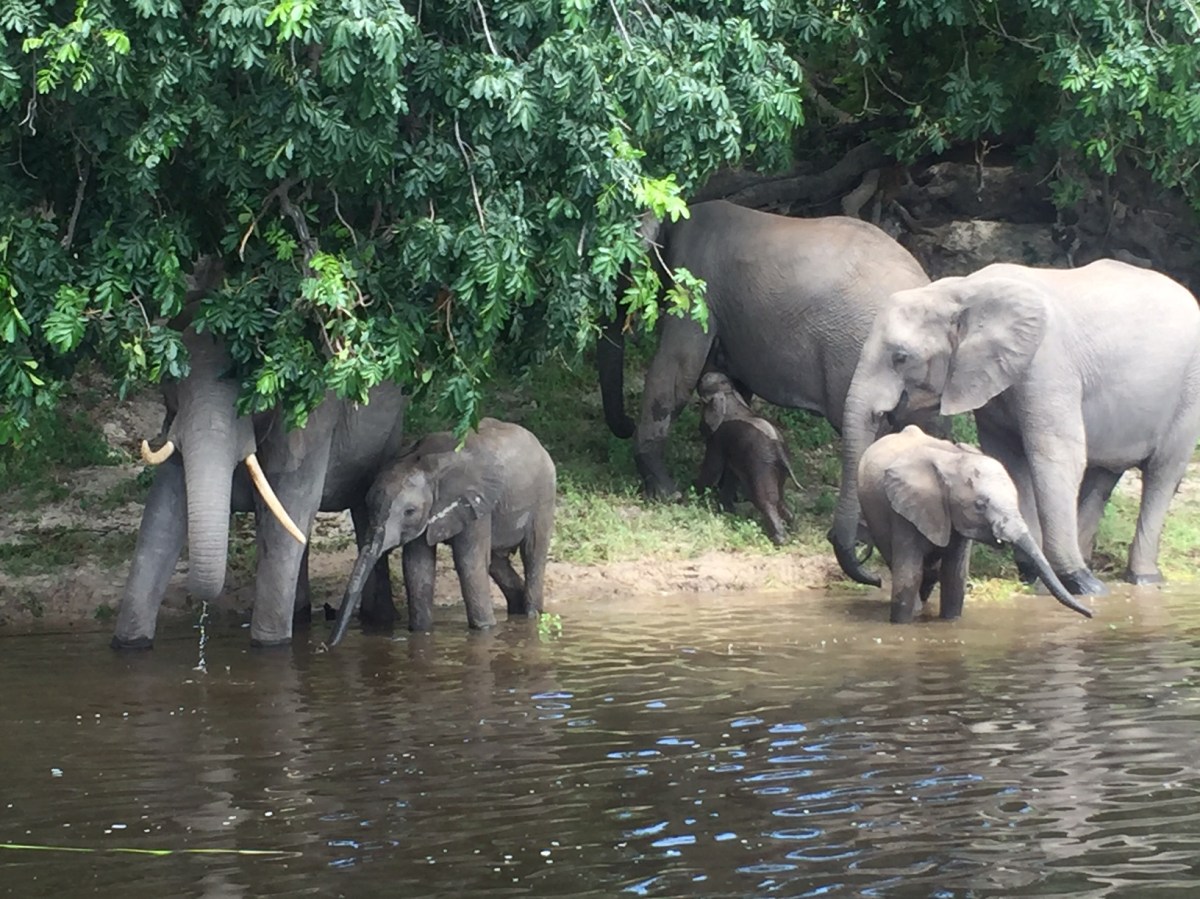
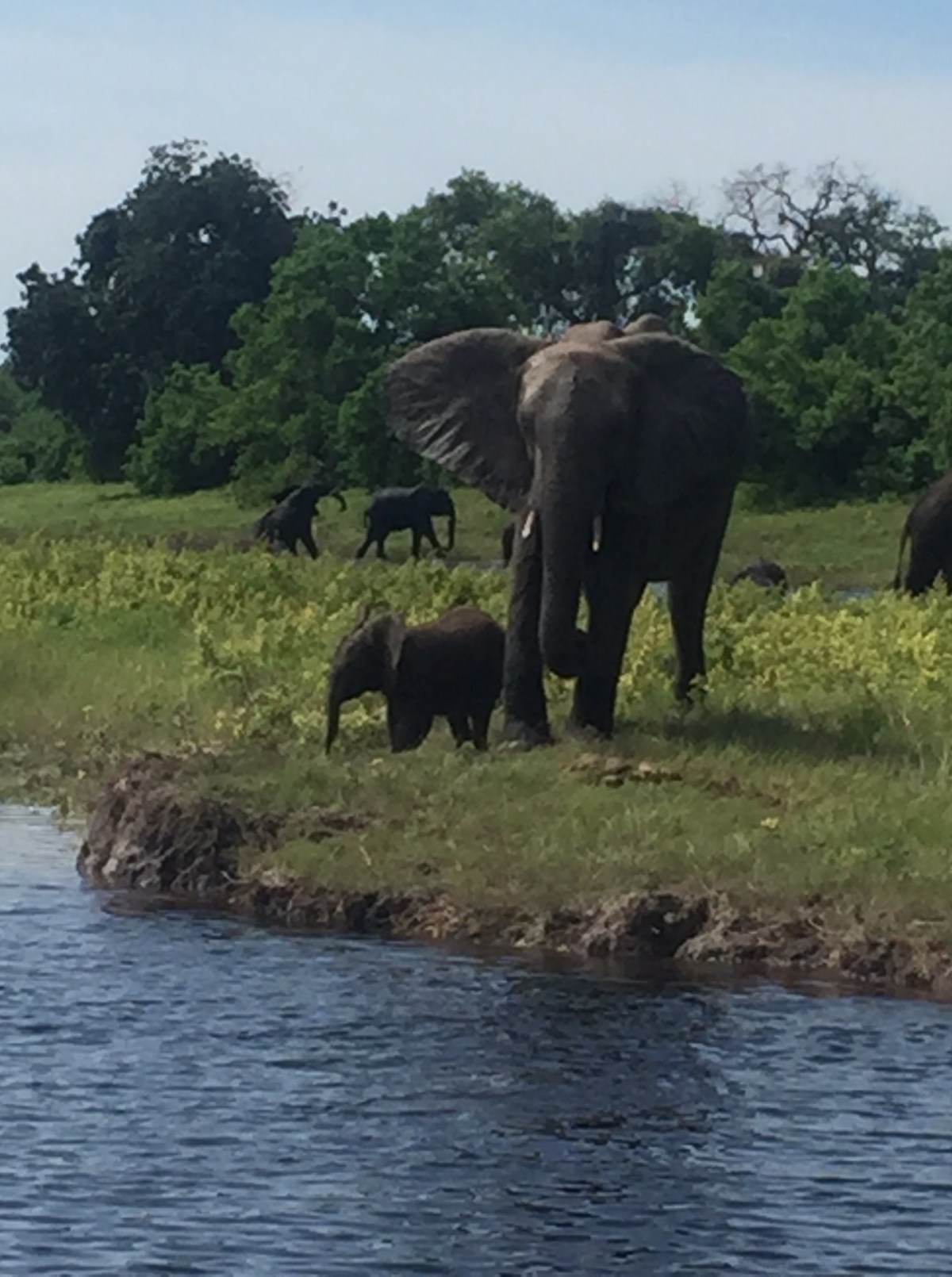
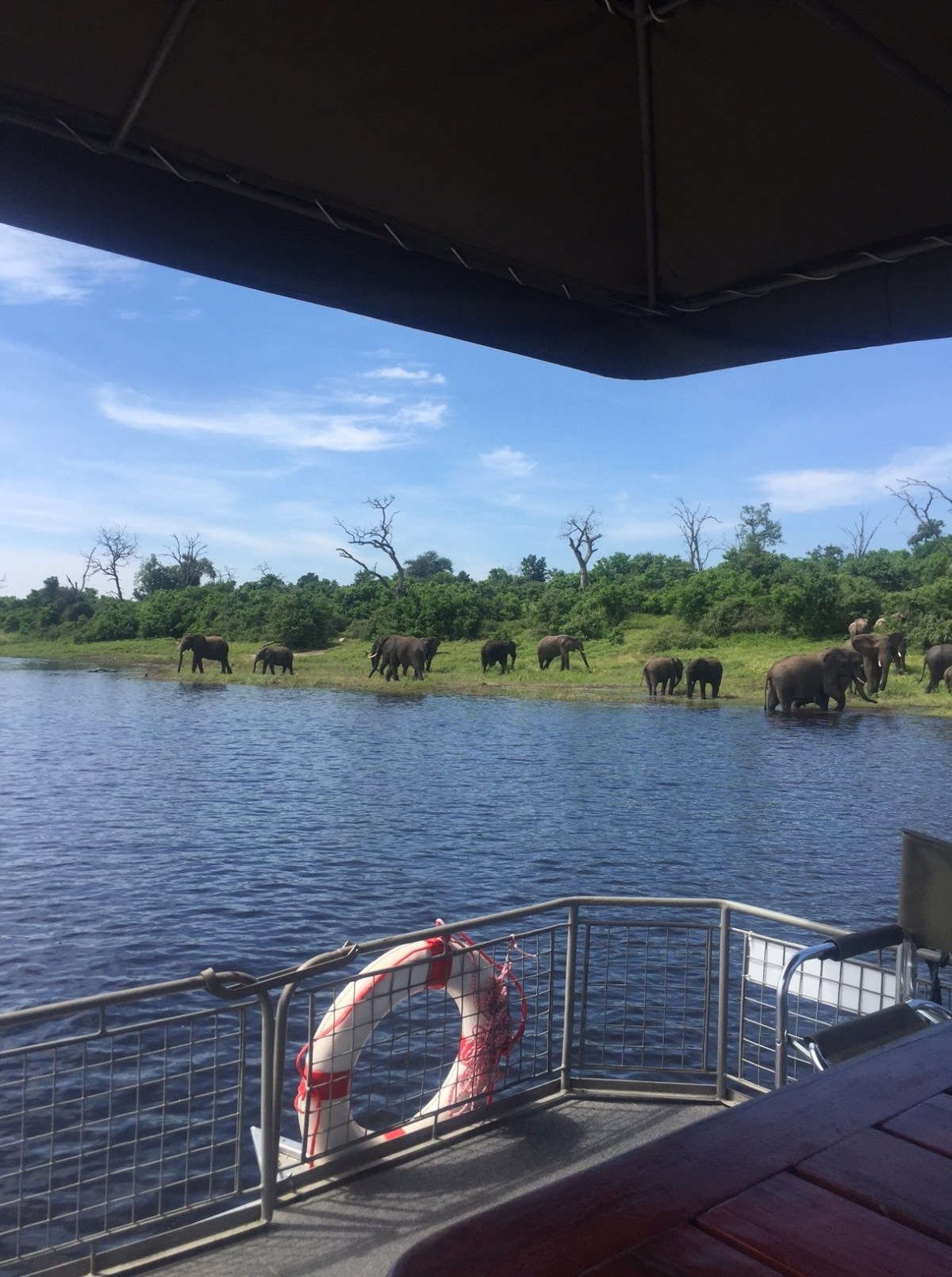
The game viewing from the river is too wonderful, with herds and herds of elephant visiting throughout the daylight hours; swimming, drinking, playing and simply enjoying the paradise that is theirs, now that the rains have come.  The rains in Botswana fall from November to March and this year has been excellent and the abundance of water was wonderful to see.  The many different shades of green were too gorgeous.  The animals all seemed so happy and unstressed – elephants, buffaloes, giraffe and many antelope – kudu, lechwe (an antelope related to the Waterbuck) and many families of playful baboons.

Ellie Viewing 3

Ellie Viewing


Ellie Viewing 2

Namibia is the other side of the Chobe River and, when flying over, we saw the Namibian side has been flooded – it was a big flood plain of several kilometres, which was extremely interesting to see and also very beautiful.


Thompsons Africa operates a fabulous day tour to Chobe National Park, from both Livingsto

ne, Zambia, and Victoria Falls, Zimbabwe, for those visitors not staying over in Chobe.  This sensational land and water-based game viewing trip departs at 7:30am.  View large herds of elephant and other grazing animals, as well as enormous crocodiles and glorious birdlife, on a Chobe cruise boat, just off the river bank.  Then take an open safari vehicle game drive through the Reserve, which includes a delicious lunch at a lodge.


We also operate transfers throughout the region, as well as river cruises on the Zambezi Queen.  This lovely 45m houseboat has 14 suites, each with private balcony, and can accom

modate up to 30 passengers.  It is a 5-star experience of pampering, indulgence and superior comfort.   The top deck is air-conditioned and consists of a dining room, lounge, and bar, as well as a sunbathing area, complete with private pool.  No expense has been spared in creating this houseboat, which is absolutely gorgeous!  The views of game are just terrific, the staff fabulous and the food, outstanding.  When cruising on the Zambezi Queen, there are plenty of other activities on offer, such as close-up game-viewing and bird-watching from smaller boats, tiger fishing, 4×4 game-viewing, a cultural tour of a local village, and aerial game-viewing by helicopter.

6

What a fabulous trip it was at this lovely time of year!  Until next time, ….


Earthy Cape Town Inner City

We all love Cape Town!  What’s not to love?  There’s Table Mountain, incomparably beautiful winelands, the famous Robben Island, a kaleidoscope of historical experiences, and so much more!  Now Cape Town inner city has introduced the Earth Fair Food Market. Open every Thursday from 12pm to 6pm, you‘ll find the Earth Fair Food Market at St. Georges Mall in Cape Town’s city bowl.


Top quality traders and artisans sell a great selection of farm cheeses, free range meat, organic produce, olives and olive oil, biltong, preserves and pâtés, and so much more!  And, there’s live music to listen to!


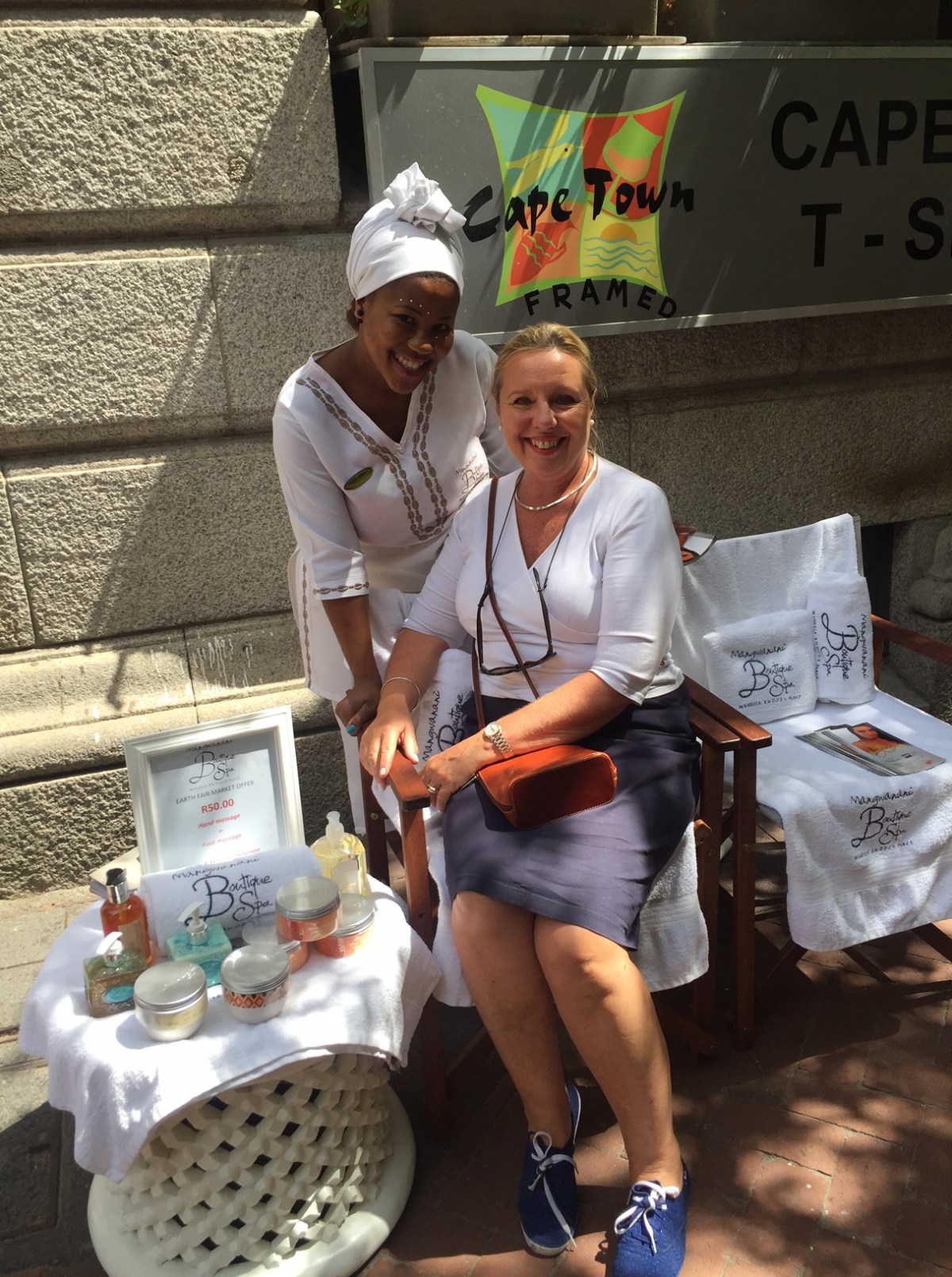
Shop for the freshest produce, directly from the producers while soaking up the historic ambience of this beautiful part of town and even enjoy a neck massage or delicious cup of Truth Coffee!

Neck Massage at St Georges Mall

St Georges Mall 2St Georges Mall 3St Georges Mall

Visiting Hoedspruit Endangered Species Centre

The Hoedspruit Endangered Species Centre (HESC) is concerned with the conservation of rare, vulnerable or endangered animals. Located on the Kapama Private Game Reserve, in Hoedspruit, South Africa, it has been operating since 1990. Its focus was initially on cheetah, but has since evolved to include all endangered and vulnerable animal species. It is home to cheetah, rhino, wild dog as well as other animals in need of care. HESC facilitates the release and establishment of captive-bred animals to the wild, as well as those which have been injured and brought back to health.

Vivie Zhou recently visited the HESC and had the following to say.  ‘This well-established centre has been operating for many years. The people are full of love and passion about the endangered animals. In addition to cheetah, the centre now has more animals including wild dogs, rhino and lion. You are able to enjoy very close views of cheetahs, wild dogs and rhino, and for me, the most interesting programme they are doing currently is testing the running speed of cheetahs in the very early mornings. Although we didn’t get to personally experience the programme, I was told its it’s a very different/unique experience for tourists. I had a wonderful time and experience at HESC.’

The Hoedspruit Endangered Species Centre (HESC) is concerned with the conservation of rare, vulnerable or endangered animals. Located on the Kapama Private Game Reserve, in Hoedspruit, South Africa, it has been operating since 1990. Its focus was initially on cheetah, but has since evolved to include all endangered and vulnerable animal species. It is home to cheetah, rhino, wild dog as well as other animals in need of care. HESC facilitates the release and establishment of captive-bred animals to the wild, as well as those which have been injured and brought back to health.

The centre takes an active role in the breeding of cheetah to prevent the further decrease in species population. A breeding programme is in place which has seen the birth of over 270 new cheetah (including 20 of the rare king cheetah).

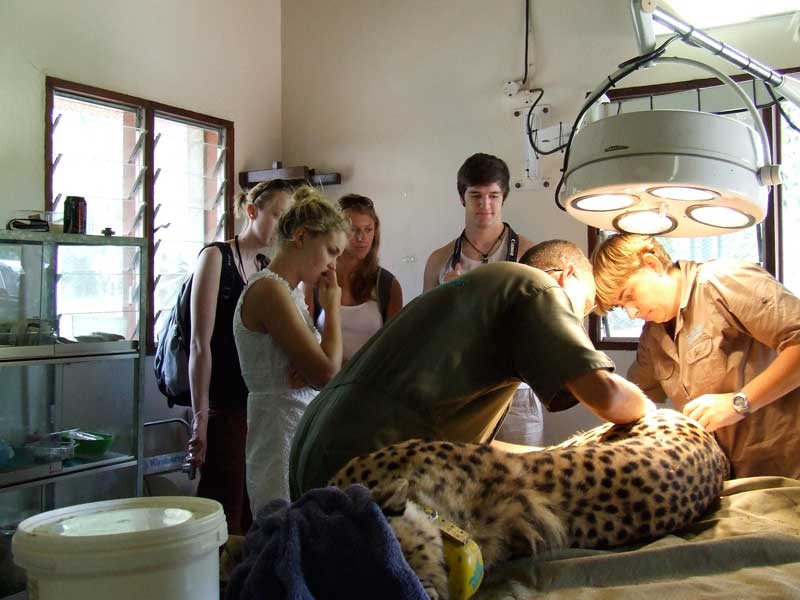
HESC has a medical treatment facility for injured animals. Many rescued animals are treated and cared for at the veterinary clinic by specialists.

With_the_vet_in_surgeryRescued rhinos @ HESC is a sanctuary for orphaned rhinos, as well as surviving victims of poaching. HESC is currently home to 4 orphaned babies whose mothers were the victim of poaching, and 3 surviving rhinos, each of which had their horns hacked off by poachers. Two of these rhinos have made a full recovery after numerous procedures by veterinary experts, at huge expense.

Daily tours of the centre are available, commencing at 09h00 every day, with the last tour at 15h00 (different schedules run during peak periods). Each tour lasts 2 hours. An introductory video is followed by a questions and answers session with the guides. Visitors to HESC are able to enjoy a game drive on the neighbouring Big Five Kapama Game Reserve at an additional rate.

HESC is also able to accommodate overnight visitors at Khula’s Cottage. This unique and extraordinary cottage, located within the perimeter of HESC, is a true African getaway from the hustle and bustle of city living.

image_khula_12HESC is actively involved in the education of learners, students and the general public about the necessity of conservation as well as related activities. This involves a community outreach programme. HESC is also a proud partner of the Rhino youth-art conservation initiative, giving youth a voice against poaching through their art.

The Wildlife Conservation Experience (WCE) is a hands-on (one to three week) intensive programme which allows participants to learn about conservation, by working closely with HESC’s staff.  This includes working with the many animal species at HESC, and the possibility of working with the wildlife vet. The programme offers, to name only a few, daily informal lectures on conservation, animal and plant identification, tracks and signs, and South African history and cultural diversity, to visit places of interest and attractions in the area. Accommodation is at Nungu Camp, situated within the boundaries of the Big 5 Kapama Private Game Reserve.

The Wildlife Conservation Trust (WCT) is a non-profit organisation which is dependent on donations and sponsorships in order to care and facilitate the animals in HESC’s care.

Vacancies!!

Looking for a GREAT place to work???

JOIN OUR TEAM OF CREATIVE, ITINERARY DESIGNERS AND IMPLEMENTORS SELLING AFRICA TO THE WORLD!

We are recruiting!  If you’re young (or young at heart), dynamic, creative, have a love for tourism and all things African and are PASSIONATE about delivering a WOW experience to your customers, then contact us today!!!!

The positions are based at our Durban Office.

Check out our website link below for details of exciting vacancies currently available at our Durban Head Office.

http://www.thompsonsafrica.com/about/careers

iSimangaliso Signs Historic Contract to Restore Lake St Lucia

The R10 million contract with Cyclone Engineering Projects (Pty) Ltd is the culmination of five years’ work by iSimangaliso and Ezemvelo KZN Wildlife. Cyclone Engineering will be removing some 100 000 m3 of dredge spoil (sand, silt and vegetation) that was placed in the natural course of the uMfolozi River impeding its flow into Lake St Lucia. With the support of the Global Environmental Facility (GEF) and World Bank, a further R20 million has been allocated by iSimangaliso to continue the work of restoring Africa’s largest estuarine system.

Img 1

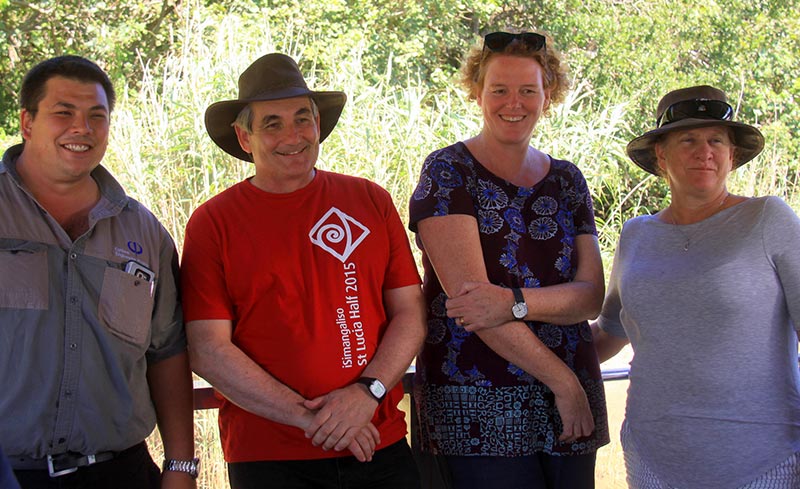
“This is a landmark moment that will stand alongside the day in 1996 when former president Mandela and his cabinet saved Lake St Lucia from dune mining. This marks the beginning of nature’s renewal and a return to wholeness for the Lake St Lucia system,” said iSimangaliso CEO Andrew Zaloumis, on signing an agreement with Cyclone Engineering’s Gerrit van Ryssen. Above, from left: Gerrit van Ryssen, Andrew Zaloumis, Bronwyn James (iSimangaliso GEF Project Manager), Nicolette Forbes (Estuarine Ecologist, Marine and Estuarine Research)

The history of Lake St Lucia’s separation

The uMfolozi floodplain was modified in the 1900s for sugarcane farming. This modification comprised inter alia the canalisation of the uMfolozi River and the clearing of indigenous wetlands. This raised red flags about the possible impacts of silt/sediment on the estuarine system – the vegetation that ordinarily acted as a filter for the water was no longer. To mitigate this risk to the system, measures were taken to partially separate the uMfolozi River from the St Lucia Estuary in 1952 by depositing dredge spoil in the natural course of the river impeding its flow to the St Lucia Estuary and artificially breaching the uMfolozi River into the sea at the south near Maphelane to prevent its natural northward migration.

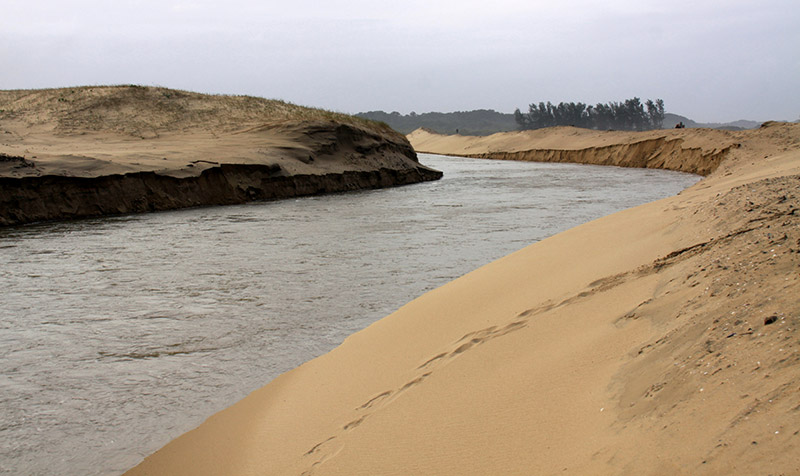
Dredge spoil was deposited there on and off until early 2000. This significantly reduced freshwater to Lake St Lucia from the uMfolozi River, the largest of the five rivers entering the system. It also interfered with nature’s ability to regulate the opening and the closing of the estuary mouth.

Img 2

The mouth of the Lake St Lucia system in 1937 (left) and 2013 (right). The 2013 photograph shows the dredge spoil pile that was placed in the river course from the 1950s for a period to try and separate the uMfolozi River from Lake St Lucia. The yellow boundary shows the first portion of dredge spoil that will be removed by Cyclone Engineering (Pty) Ltd. The equipment, adapted for salt water use, will be on site in May.

Today the impacts of this approach are still evident. With current rainfall levels the lowest in 65 years, the Lake system has compartmentalised. Presently, only some 30% of the Lake’s surface area has water and species recovery is slow.

The dramatic events during the drought of 2002-2012 brought this management approach into question. The Lake had 10% coverage and species died out as a result of the high salinity levels. The Tugela Bank prawn fishery collapsed and other fisheries suffered heavy losses. Natural resources available for subsistence use decreased significantly and tourism was negatively impacted.

Innovative research by independent researchers from a range of disciplines was pulled together under the auspices of the newly established iSimangaliso Wetland Park Authority. In 2010, a multi-disciplinary research team was contracted by iSimangaliso with support of the Global Environmental Facility (GEF) and the World Bank to find solutions for the hydrological problems facing the Lake St Lucia system.

The new research debunked the myth that siltation and sediments were a problem for the Lake St Lucia system. Silt is an important component of the estuary benthos – the life-giving organisms that inhabit the bed of the estuary and provide nutrition for, inter alia, fish. It also concluded that the uMfolozi River is a significant contributor of freshwater to the St Lucia estuary, and, importantly, is the powerhouse that drives the mouth dynamics.

The study strongly recommended that nature should be left to its own devices and the uMfolozi should be allowed to pursue its natural path northwards. This would allow the uMfolozi to once again take its rightful place as the contributor of some 60% of the Lake’s freshwater.

And so in 2011/12, iSimangaliso with Ezemvelo KZN Wildlife launched its publicly consulted management strategy for the Lake St Lucia Estuary: minimum interference, no artificial breaching and the re-establishment of the natural river course. The first intervention in the implementation of this strategy, frequently referred to as the spillway, was completed in 2012. It entailed the removal of small quantities of dredge spoil to facilitate the flow of the uMfolozi River into the estuary along its natural course. This was no more than the river had been pursuing of its own accord when it pushed through the dredge spoil on the beach in 1999 and 2007, breaching to the sea, far north of the popular St Lucia Ski Boat Club.

Img 3

The spillway between the uMfolozi River and the Lake St Lucia Estuary was opened in 2012. “Freshwater from the uMfolozi River is critical – even more so in times of drought,” says Zaloumis. “The restoration of the uMfolozi’s natural course is important for the hydrological functioning of Lake St Lucia. Without this, Lake St Lucia will not recover.”

A unique resource

The world recognised the uniqueness of Lake St Lucia, when it said there “is no other place like this on the globe” and accorded it the privilege of World Heritage status. Lake St Lucia is the world’s oldest protected estuary. It was first proclaimed in 1895. It was also recognised as a wetland of international significance and made a Ramsar site in 1986. It is Africa’s largest estuarine lake and comprises over 60% of South Africa’s estuarine area and 90% of its protected estuarine area. It is one of five coastal estuaries in South Africa.

South Africa is a water scarce country and finds itself in one of the worst droughts in living memory. Innovation is key to conserving and managing our water resources. The struggle to save Lake St Lucia is central to this issue. Estuaries, with their surrounding wetlands, comprise some of the most productive yet threatened eco-systems in the world. They are important in the moderation of global climatic conditions, naturally improve water quality, and provide important economic and recreational opportunities. They form a vital link between marine, aquatic and terrestrial eco-systems.

Biodiversity

Img 4

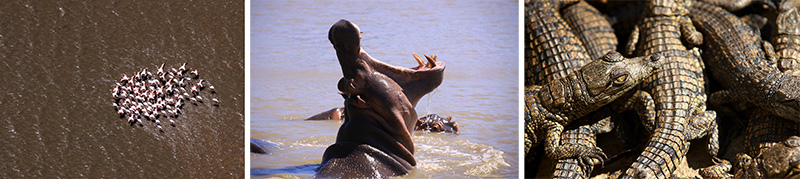
The Lake St Lucia estuarine system supports high levels of biodiversity and viable populations of threatened species, which are of international and national importance, including feeding and breeding areas for endangered and endemic species. It is the most important nursery ground for juvenile marine fish and prawns along the KwaZulu-Natal coast. More than 50% of all water birds in KwaZulu-Natal feed, roost and nest in this estuary. Importantly it is a breeding area for several birds, which are rare or have limited distributions in South Africa. The Lake St Lucia estuarine system is one of the most important protected areas for the conservation of the Nile crocodile in South Africa. The hippopotamus is an iconic animal for Lake St Lucia. Listed as ‘Vulnerable’ on the IUCN Red List, Lake St Lucia is recognised as having the largest viable population in South Africa. The contribution to fisheries of the Lake St Lucia system is also significant. Seventy-one of the 155 fish species that have been recorded in the St Lucia estuarine system use it as a nursery.

Livelihoods

Img 5

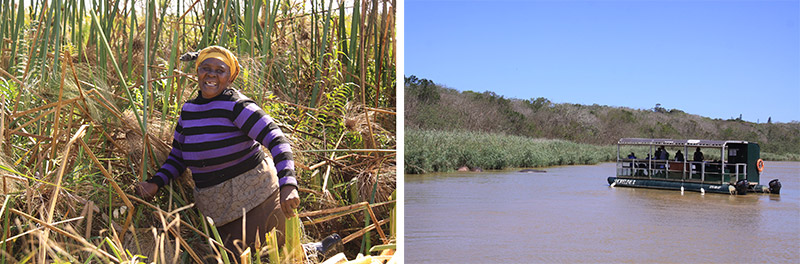
The health of the St Lucia ecosystem is directly linked to the livelihoods of people in the area. The Park is situated in the uMkhanyakude District Municipality, one of the poorest and most underdeveloped local authorities in South Africa. Over 80% of households live below the poverty line and only about 16,5% of the population is formally employed. Some 80 000 people living in 15 000 households within 15km of the Lake St Lucia estuarine system and use the system extensively. Harvests of raw materials, particularly estuarine sedges, are estimated to be worth around R7,5 million a year.

Tourism related to the Lake St Lucia estuary area employs an estimated 1291 direct full-time equivalent jobs and 6924 indirect jobs. There are about 510 000 visitors to the study area per annum, of whom 42% are foreign visitors, who spend R46 million on an estimated 157 000 tourism activities from local operators.

Wildlands Conservation Trust News – February 2016

UPDATE ON THE RHINO POACHING CRISIS – FEBRUARY 2016
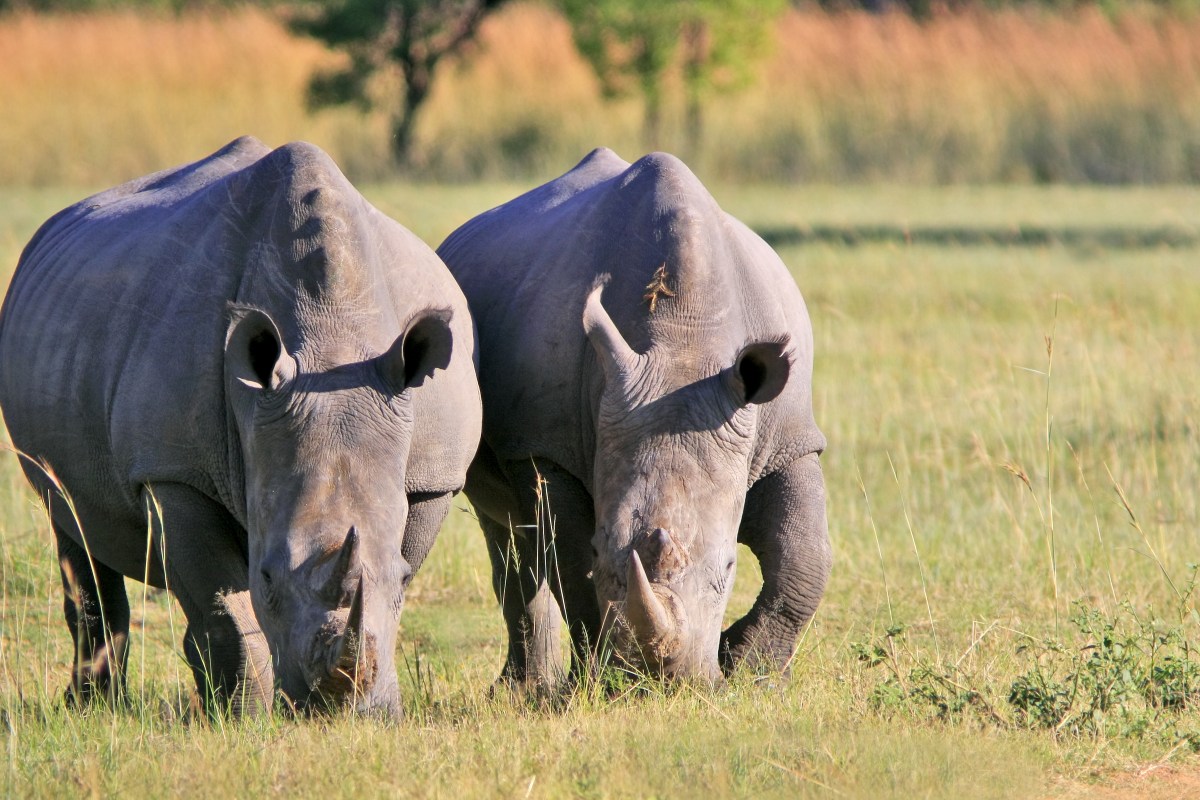
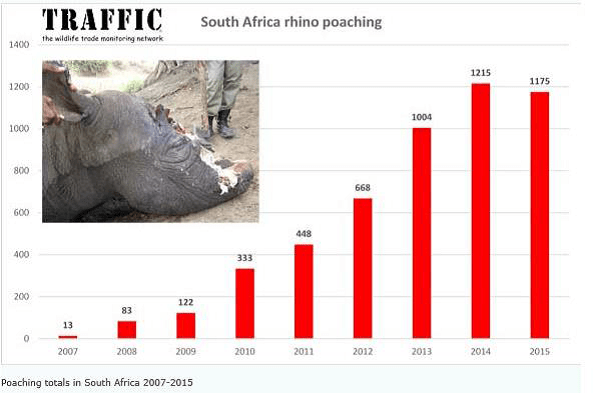
South Africa Reports a Small Decrease in Rhino Poaching for 2015 – Johannesburg, South Africa, 21st January 2016—South Africa announced the official number of Rhinos illegally killed in the country during 2015. The figure of 1,175 represents a slight drop on the 1,215 record total in 2014, but overall Rhino poaching figures for Africa total a record high for the continent.

Graph for February 2016 Update
“While a slight decrease in Rhino poaching in South Africa was apparent in 2015, and perhaps the authorities are having some impact on the ground, these numbers are hardly cause for celebration or complacency,” said Sabri Zain, TRAFFIC’s Director of Policy. “The figures remain unacceptably high and continent-wide the scale of the Rhino poaching crisis is spreading.” The 2015 decrease in South Africa has been more than offset by significant increases in neighbouring Zimbabwe, where Rhino poaching rose from 12 in 2014 to a widely reported total of “at least 50” last year, while losses in Namibia also rose sharply from 24 in 2014 to 80 in 2015.
According to TRAFFIC data, Africa-wide Rhino poaching totals reached 1,299 animals in 2014. The latest figure from South Africa means the continent-wide total in 2015 was at least 1,305. “For Africa as a whole, this is the worst year in decades for Rhino poaching,” said Tom Milliken, TRAFFIC’s Rhino Expert. “The poaching epicentre has spread to neighbouring Namibia and Zimbabwe, but is nowhere near being extinguished in South Africa: despite some commendable efforts being made, we’re still a very long way from seeing the light at the end of this very dark tunnel.” Of the four major Rhino range States, only Kenya is expected to report a significant fall in Rhino poaching in 2015.
LATEST NEWS – UPDATE ON THE SAGA AROUND THE LEGALISATION OF RHINO HORN TRADE
A South African judge on 20 January upheld a decision by a lower court to lift the government’s ban on domestic trading of Rhino horns. The decision has raised fears among conservation activists that it could undermine efforts to end Rhino poaching, which is at record levels in South Africa.
“Reopening South Africa’s national Rhino trade will make it even harder for already overstretched law enforcement agents to tackle record Rhino poaching,” the World Wide Fund (WWF) said in a statement. Game breeders John Hume and Johan Kruger won a judgement last November that lifted the moratorium against domestic trading, which has been in place since 2009. They argued that the government’s ban violated their constitutional rights to sell the horn. Hume claimed that the ban exacerbated poaching and, with it in place, he would’ve had to get rid of his 1,200 farmed Rhinos.
The government’s appeal of that decision was rejected by the North Gauteng High Court. South Africa is currently home to 20,000 Rhinos, about 80% of the world’s Rhino population. This population has been the target of a significant uptick in poaching: a 9,000% rise between 2007 and 2014, according to data from WWF. Efforts to combat the trend have included anti-poaching units, drones, dehorning, relocation of herds, and even anti-poaching dogs who can rappel from helicopters.
It is unclear who Hume and other Rhino herders, will be able to sell the horns to. There is little demand for them in South Africa. Most of the demand for Rhino horns comes from Asia, where the belief in their medicinal power makes them a pricey commodity worth up to $75,000 per kilogram. In Vietnam, Rhino horn can fetch up to $100,000 per kilogram, due to the myth that ingesting the horn can cure cancer. A ban in international trade in Rhino horns has been in place under the Convention on International Trade in Endangered Species (CITES) since the 1970s, and activists say the only way to sell it is through illegal channels. “It is inconceivable that anyone would buy it—unless they intend to sell it abroad illegally or they are speculating that international trade will be legalized,” WWF said in their statement.
South Africa will host the next CITES conference in Johannesburg later this year, and has said it would like to discuss whether lifting the international ban might help curb Rhino poaching. With only 29,000 Rhinos left in the world, conservationists are saying the decision to restart domestic trade will only accelerate the Rhino’s march towards extinction.